 Chiweenie
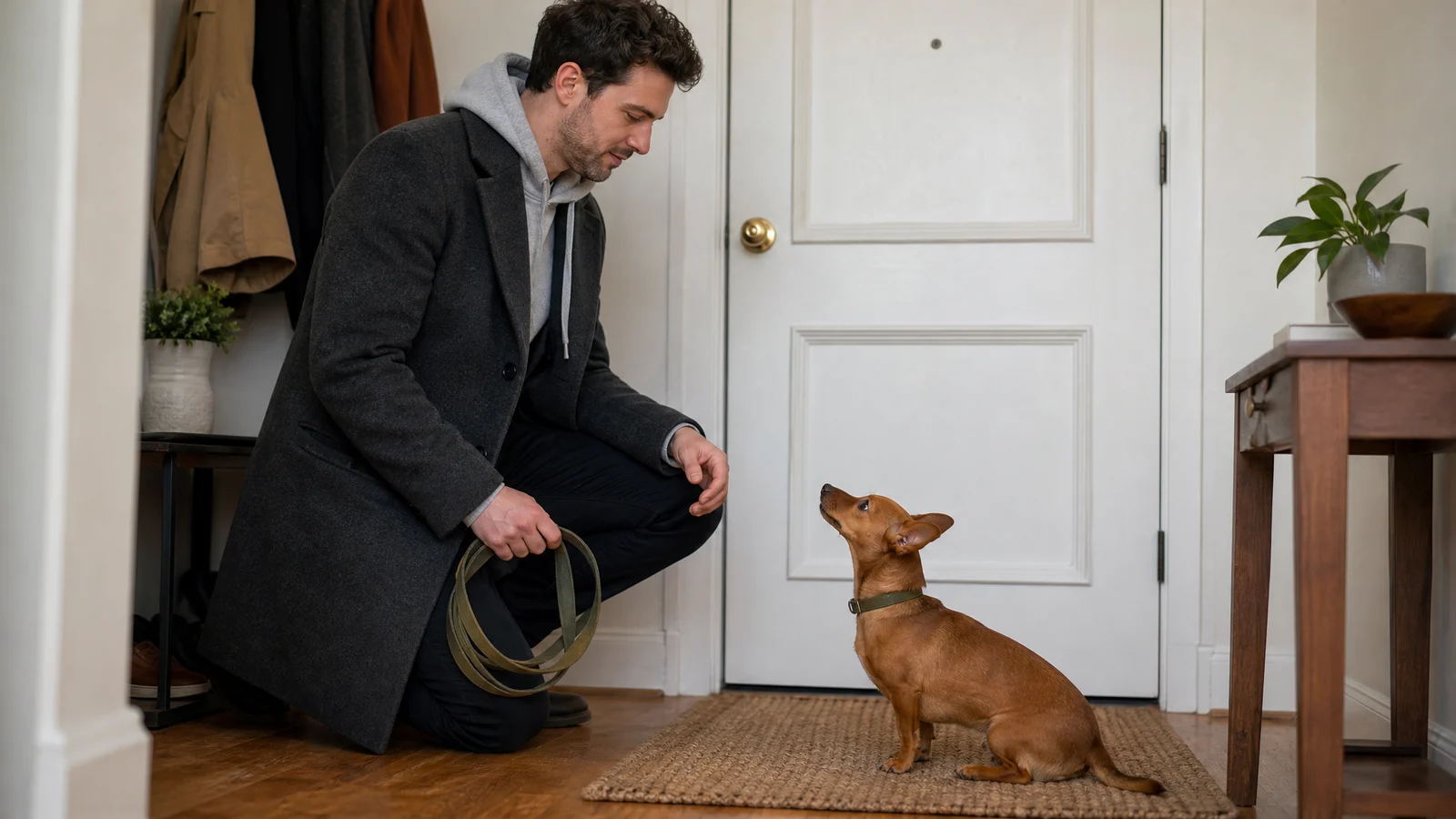
An eight-month-old Chiweenie who responds at breakfast but overlooks the same cue outside has not necessarily forgotten the lesson. Adolescence can bring changes in attention and behavior, while familiar surroundings become more interesting. The useful question is where the response still works and what is different when it becomes difficult.
This guide follows a familiar cue through ordinary moments in a day, from a quiet room to the doorway, a sniffing opportunity and evening rest. We will keep each request small enough to succeed and make the reward relevant to that moment. Eight months is context for your individual dog, rather than a deadline for either perfect manners or unavoidable trouble.
Eight Months and Chiweenie Adolescent Training
Development does not follow an identical calendar in every cross. Guidance on adolescent changes in dogs describes variation in timing and the possibility of less reliable responses. A Chiweenie's small size does not remove the need to support learning through that period.
Choose one familiar response to observe today, such as turning toward you when called nearby. Keep the situation safe even if the dog does not respond. This is a way to adjust teaching, not a reason to test recall beside an open exit or remove a leash before reliability is established.
Keep the note concrete. “Turned in the kitchen, watched the yard at the door” identifies a difference you can change more clearly than “ignored me.”
A Quiet Breakfast Training Opportunity
Start where your Chiweenie usually finds the cue easy. Prepare a suitable reward, wait until they are available to engage and ask once. Mark the useful response promptly, then deliver the reward without adding another task. A clean, familiar success gives the day a more informative starting point than repeated calls across a busy room.
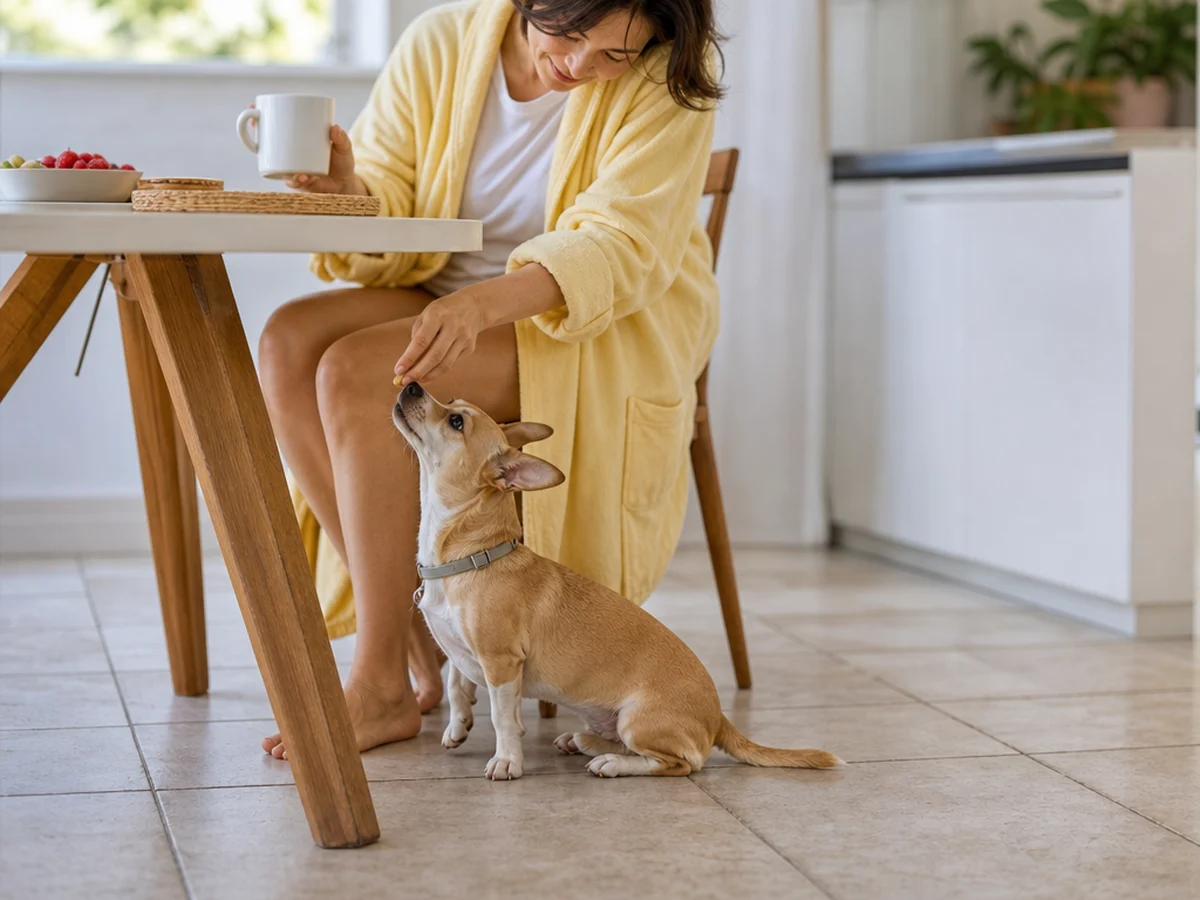
If the response is uncertain even here, simplify the lesson. Move closer, reduce competing activity or refresh the movement before expecting the verbal cue alone to carry it. Finish after a manageable success. You do not need to keep repeating the request until breakfast becomes a long obedience session.
The broader Chiweenie puppy training timeline places these skills within development. Today's task is narrower: establish what your dog can comfortably do now, then carry that information into the next setting.
Check that the word means the same thing to everyone at home. If one person uses it for approaching and another repeats it while asking the dog to stay still, the lesson becomes unclear. Agree on the response you want before treating a missed cue as a developmental change. Consistent wording is especially useful when different family members handle breakfast, walking and evening care, giving the dog the same information throughout those transitions.
Adolescent Training at the Chiweenie Doorway
The doorway adds movement, smells and the expectation of going somewhere. A cue that worked beside the food preparation area may be harder here even before the door opens. Begin far enough inside that your dog can still reconnect with you, using the same simple response rather than adding a complicated sequence.
Set up the safe exit before practice. Keep the door secured and use appropriate walking equipment, so learning does not depend on catching the dog after a missed response. Reward a turn toward you, then continue with the ordinary preparations when the dog can manage them calmly. If opening the door changes everything, practice with the door closed again before introducing that movement as a separate challenge.
The principle of reward-based dog training applies here as it does in the kitchen. Clear boundaries and useful rewards belong together. Making the doorway manageable gives your adolescent a response worth practicing instead of a repeated opportunity to struggle.
Sniffing Within Adolescent Training
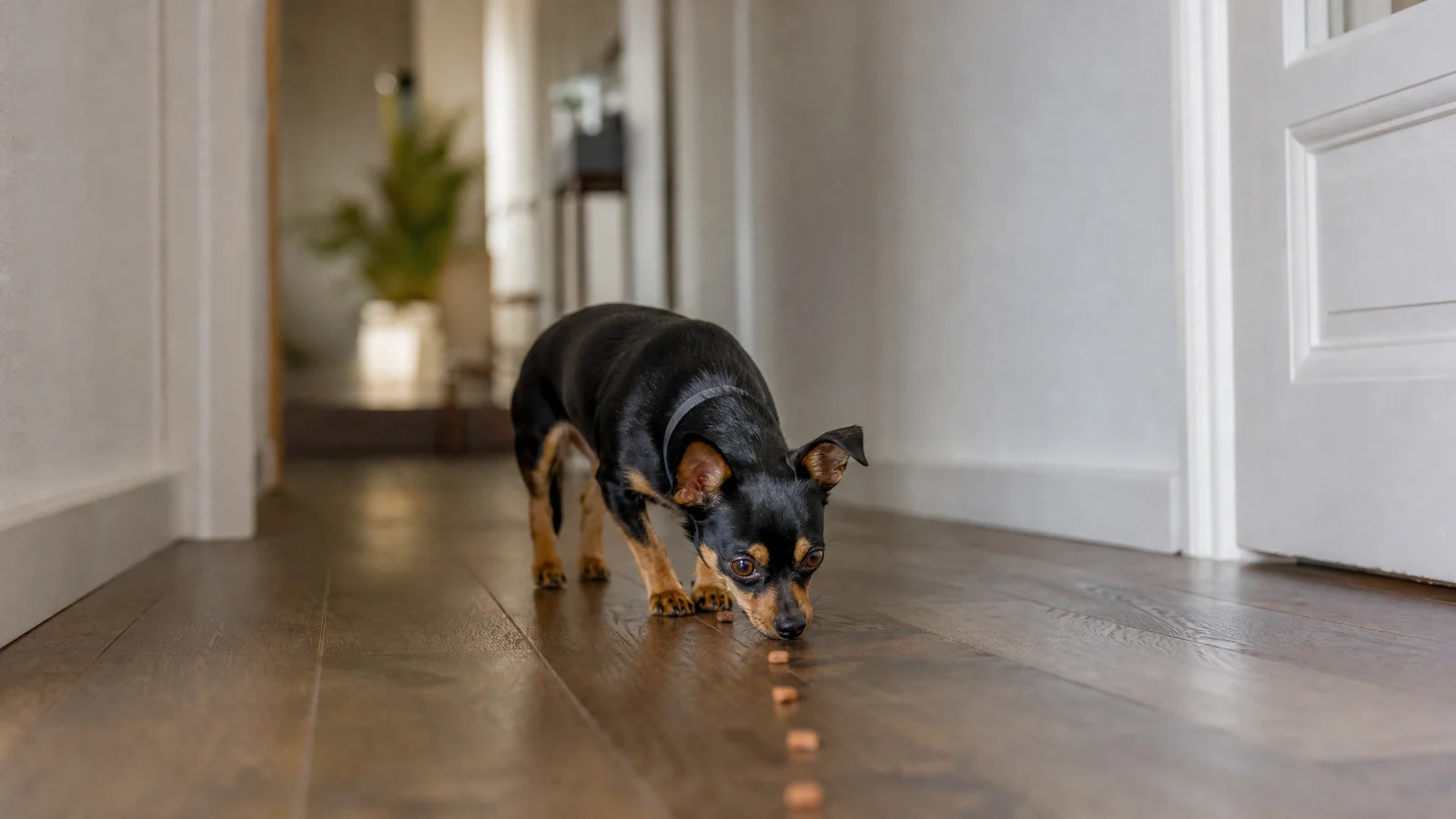
Outside, your Chiweenie's attention may settle on a smell long before you notice anything interesting. Dachshund ancestry provides context for that interest, although individual crosses vary. Treat investigation as part of the walk. Constantly calling the dog away from every scent can make your cue predict the end of something enjoyable.
Use an easy moment to invite a turn, reward the response and, where safe, allow exploration to resume. That creates a different outcome from every successful cue ending the walk. Keep the leash arrangement secure while you work, and choose surroundings where the dog can notice you without abandoning an overwhelming distraction.
- Ask during a brief pause in investigation, when your dog is already able to shift attention.
- Use a reward that matters in that setting, which may include returning to a safe sniffing opportunity.
- Move to an easier area when repeated requests produce no usable response.
Compare the response with the morning's easy version. The difference helps you choose tomorrow's practice location, rather than deciding that the cue has stopped working everywhere.
Evening Adolescent Training Can Be Brief
After a busy day, another demanding lesson may contribute little. Your Chiweenie may need a calmer activity or an opportunity to rest before they can engage comfortably. Keep an evening request familiar and brief, then notice whether the dog can settle afterward rather than searching for more stimulation.
Advice on supporting adolescent puppies includes structured activity and continued learning. That does not require filling every awake moment with cues. Play, appropriate exploration and comfortable rest create the surroundings in which short lessons can remain useful.
Choose a stopping point before enthusiasm fades. A brief turn toward you followed by a quiet resting opportunity can be enough for this moment. If your dog keeps moving away from practice, reconsider the timing instead of extending the session to obtain a more impressive finish for the day.
What Your Chiweenie Training Notes Reveal
At the end of the day, compare the settings instead of counting every missed response equally. Success indoors with difficulty at the door suggests a different next lesson from uncertainty everywhere. Keep the location, competing activity and reward in your notes so the pattern stays concrete enough to change. You can then compare similar moments across days instead of treating a busy outing and a quiet kitchen response as equivalent tests.
Regular veterinary checkups remain important throughout adolescence. Discuss a sudden change in responsiveness, especially if you also notice changes in movement, appetite, rest or ordinary interactions. Age can provide context without explaining every new behavior, and a training adjustment should not replace attention to the dog's overall wellbeing.
Bring persistent difficulty to a qualified reward-based professional. Your notes can help them assess the cue, timing and setting together.
One Chiweenie Cue to Carry Into Tomorrow
Choose tomorrow's easiest useful practice from what you observed today. It might be a turn farther inside the doorway or a response during a quieter part of the walk. Keep the reward worthwhile and the lesson short enough to end comfortably, allowing your teenage Chiweenie to build reliability through experiences they can understand.
 Training basicsCan Chiweenies Be Easy to Train? A Temperament Test
 BehaviorWhy Is My Chiweenie Snapping and Biting, and Is It Aggression?
 Exercise and jobsAre Chiweenies Smart Enough for Scent Games and Obedience?