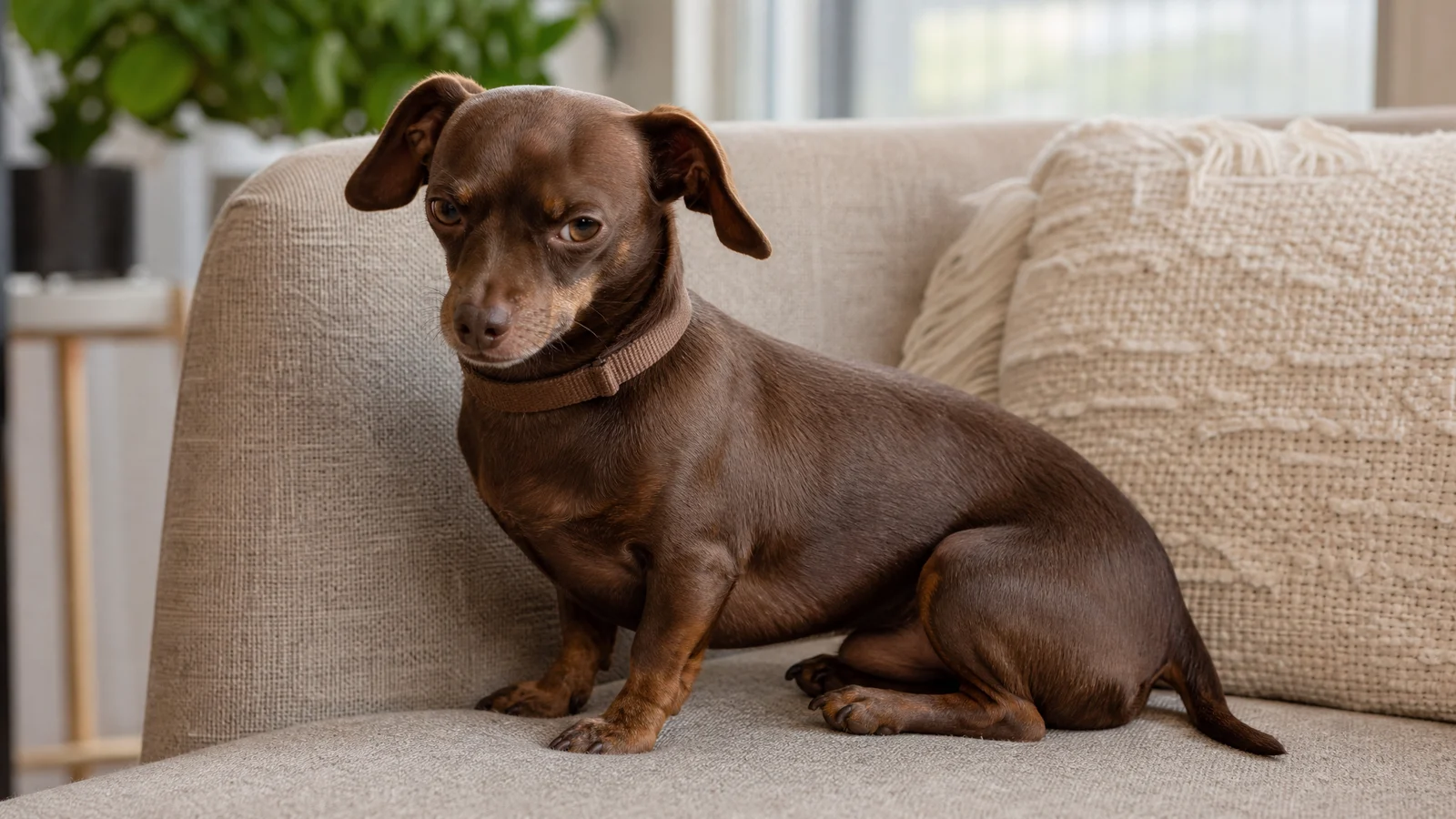
 Chiweenie
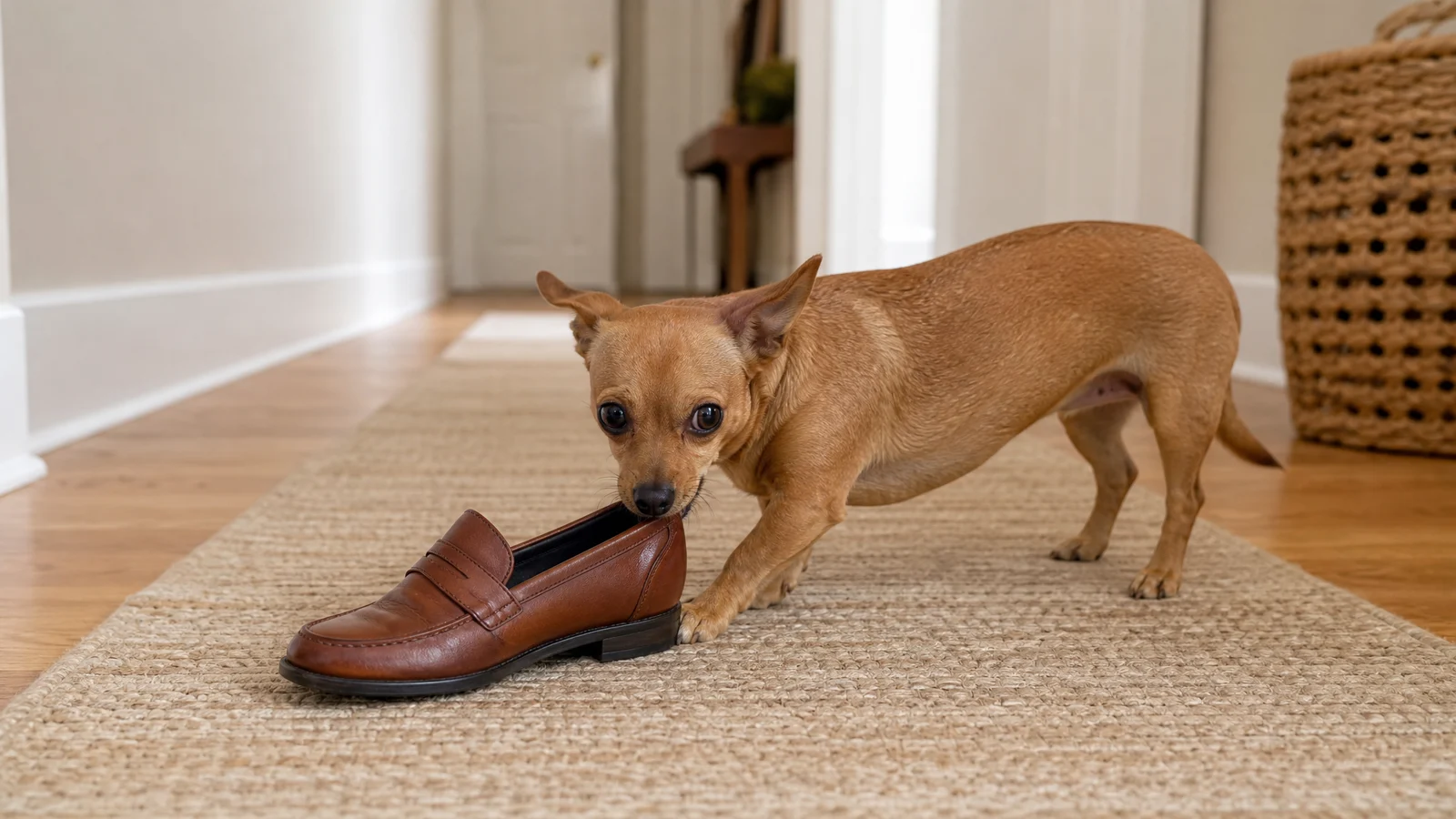
Why would a Chiweenie ignore a basket of toys and carry off a shoe? The available object may be easier to reach, more interesting to investigate or connected with an enjoyable response from a person. Having appropriate toys in the room does not necessarily make using them the most rewarding choice.
Both parent breeds bring an interest in activity and play, but individual Chiweenies differ in what holds their attention. Some enjoy working on a suitable chew beside the family. Others prefer carrying, searching or playing with someone, so an unused toy basket can conceal a mismatch between the activity offered and the activity wanted.
Below, we follow the chewing choice before, during and after it happens. The purpose is to change the next opportunity: fewer accessible belongings, more appealing alternatives and a calm response when the wrong object is already in the dog's mouth.
Before Your Chiweenie Starts Chewing
The useful clues usually appear before damage does. Notice where the object was, what your dog had been doing and what happened when someone saw them carrying it. Those details help you distinguish an easily available pastime from a pattern connected with departures, household activity or a particular kind of material.
Access Leaves a Pattern
Look around from a small dog's height. Shoes under a chair, loose fabric beside the couch and an open bag may all be simpler to reach than the permitted toys. A Chiweenie does not need a complicated reason to investigate an interesting object that keeps appearing within reach. Check the places where objects return after cleanup, since a bag left beside a different chair may recreate the same opportunity.
Record the setting without turning each incident into a judgment about the dog. The same household can contain several different chewing problems, and each may need a different first adjustment.
| Recurring Clue | Useful Question | Change to Try |
|---|---|---|
| Objects taken from an open bag | Is access creating the opportunity? | Store the bag away and offer an appropriate activity nearby |
| Belongings carried toward people | Does the response start a lively interaction? | Arrange play before that pattern begins and handle retrieval calmly |
| Damage clustered around being left | Are there other signs of distress? | Discuss the absence pattern with a qualified professional |
Activity Before the Object
A quiet room can suit a resting Chiweenie yet leave an awake dog looking for something to do. Consider whether there was an opportunity for play, exploration or a suitable chewing activity before the household became busy. Changing that earlier moment may be more effective than repeatedly interrupting the later choice. Prepare an alternative before starting your own task, while you can still supervise whether your dog uses the activity as intended.
The Chihuahua parent's activity profile includes mental stimulation needs, which is useful context for this cross. Parent traits do not determine an identical daily schedule for every Chiweenie. Use your dog's engagement and ability to settle to judge whether the available activities are a good fit.
The Material Tells You Something
Separate carrying from working an object apart. A dog who collects a shoe and waits nearby may be seeking a different interaction from a dog who settles alone and steadily shreds fabric. That difference affects which alternative is likely to compete with the household item.
Enjoying a particular texture does not make every similar material suitable for chewing. If they tear bedding, supervise access and choose an appropriate alternative. Our guide to Chiweenie blanket burrowing distinguishes comfortable nesting from fabric damage, which can look similar until you watch the outcome.
Activities That Compete With Chiweenie Chewing
An alternative has to be usable at the moment your dog wants an activity. A chew stored out of reach, a puzzle that is too difficult or a toy that only becomes interesting when someone plays may not serve the same purpose. Match the offer to the behavior you observed before adding more equipment.
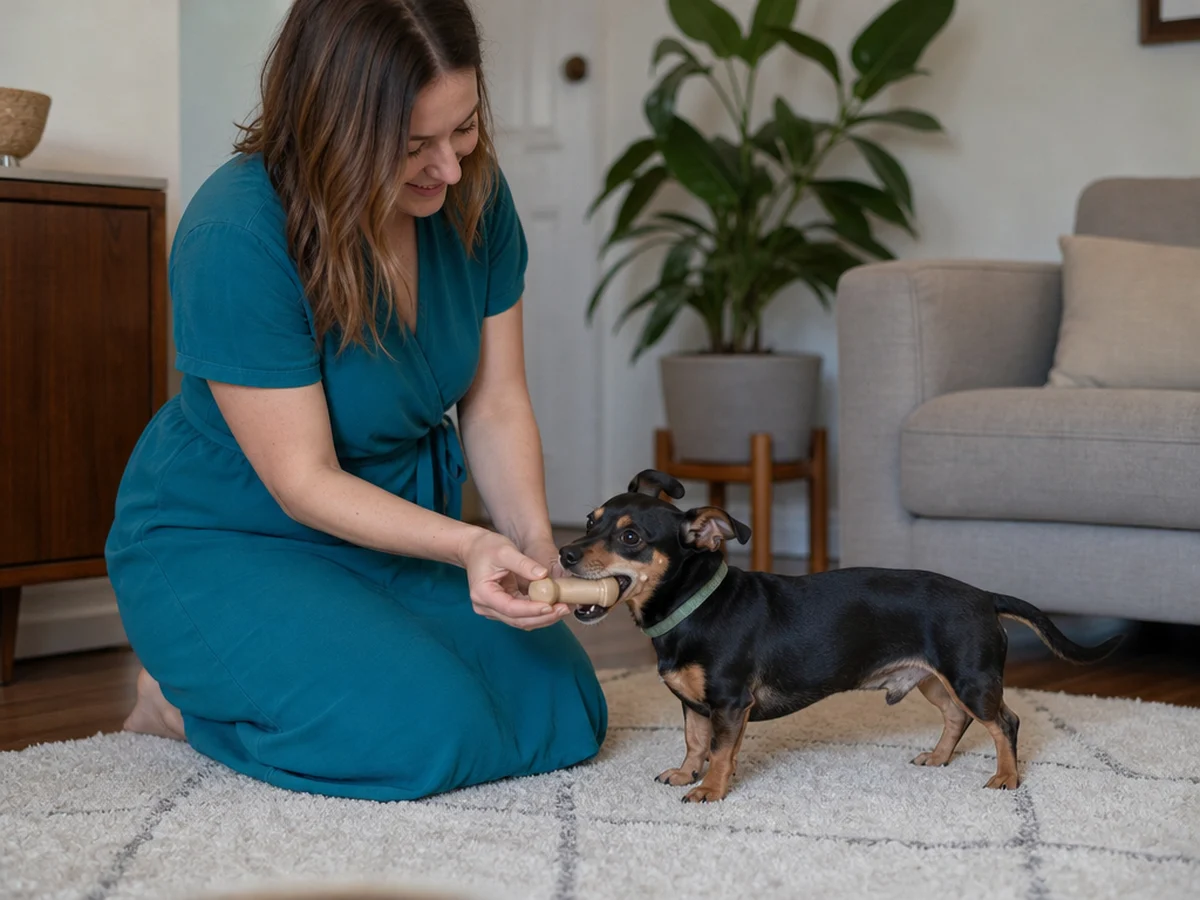
A Suitable Chewing Choice
Select a toy or chew appropriate for your dog's size and the way they use their mouth. Follow its safety guidance and supervise first use. Small size does not mean delicate chewing, and a determined Chiweenie may damage an item that remained intact with another dog.
- Check whether the dog can use the item comfortably without breaking off pieces or trying to swallow unsuitable parts.
- Inspect it during ordinary cleanup, when you can remove damage without reaching into an active chewing session.
- Ask your veterinarian about appropriate options if you are uncertain which materials suit your individual dog.
Make the first opportunity easy to discover. Put the suitable item where supervised chewing is welcome, near the family if company matters to your dog. Quietly acknowledge their interest and allow them to continue, rather than repeatedly taking the item back to present it again.
Store the other permitted toys so you can bring out a different option when the current activity loses interest. Rotation is useful when it renews engagement, but it should not interrupt contented chewing. Let the dog finish a suitable activity before changing the available choices, and note which items remain useful without your involvement. A useful rotation reflects those preferences rather than changing everything simply because a new day has begun.
Food Searching With an Achievable Finish
Some dogs need investigation as well as something to hold. Guidance on everyday canine enrichment describes food puzzles as a way to add mental activity. Choose a suitable, supervised setup that your Chiweenie can solve without tearing apart materials you do not want them to consume.
Make the first puzzle easy to solve. Simplify it if your Chiweenie loses interest or dismantles the container instead of finding the food.
Play With a Clear Ending
A Chiweenie who brings belongings toward people may enjoy shared play more than solitary chewing. Make appropriate play available before the familiar search for a shoe begins. Keep suitable toys within the adult's reach so starting that interaction does not depend on the dog first presenting a forbidden object. Notice whether planned play changes that pattern over several ordinary opportunities, rather than judging the idea from a single busy afternoon.
End shared play predictably. Offer a quiet next activity so your Chiweenie has somewhere useful to put their attention as the household moves on.
Rewards need not interrupt every moment of useful play. Your participation can keep an appropriate toy interesting, while calm access to a chew can support independent time afterward. Choose the response that fits the activity instead of turning every object choice into the same food exchange. Independent chewing and shared play can both be successful outcomes, even though the human contribution to each looks quite different.
Movement That Supports Attention
Suitable walks and exploration belong in the wider routine, but adding exercise does not teach which objects are available to chew. Guidance on exercise and unwanted behavior makes that distinction. Keep the daily activity appropriate for your dog's age, comfort and individual needs.
Compare how your Chiweenie uses toys after different ordinary activities. A relaxed sniffing opportunity may leave them ready for quiet chewing, while exciting play may call for a gentler transition. Look for useful engagement and rest, rather than trying to make the dog too tired to investigate anything.
When Unwanted Chewing Is Already Happening
Once the object is in the dog's mouth, the immediate task is a safe response. It is a poor moment to demand a skill they have never practiced or to turn retrieval into a chase. Keep your movements calm and assess whether the dog is comfortable leaving the object.
A Calm Exchange When Appropriate
With a relaxed dog and an ordinary object, offer a worthwhile alternative that allows them to move away willingly. Wait until they have fully left the object before collecting it. Keep the appropriate activity available afterward, so the interaction leads somewhere useful instead of ending with another search for entertainment.
A stiff posture or hovering over the object means give space. Our Chiweenie toy guarding and trades guide covers that decision, and children should always get an adult.
- Check the situation from a safe distance before approaching the object or the dog.
- Offer an appropriate alternative only when the dog can participate comfortably and voluntarily.
- Collect the abandoned item after the dog has moved away, then remove the original access opportunity.
Contact your veterinarian promptly about dangerous objects or possibly swallowed pieces. Follow their guidance and address access afterward, keeping people safe during retrieval.
The Human Response Becomes Part of the Pattern
Notice whether every stolen object starts an exciting pursuit or produces the most engaging activity of the day. The answer should change your planning before the next incident. Offer useful play and rewarding toy choices while belongings are put away, rather than waiting for another theft to begin interacting. Changing this earlier opportunity gives the dog a legitimate route to interaction without making an unsuitable object the usual starting signal.
Reward an appropriate choice when you see it happen naturally. If your Chiweenie selects their own suitable toy, join briefly or let them enjoy it undisturbed according to their preference. The value lies in making that permitted choice work well, not in repeatedly interrupting the dog to announce that they chose correctly.
- Keep storage consistent between adults, especially for bags, shoes and children's belongings.
- Prepare a suitable activity before the household becomes unavailable for play or supervision.
- Record whether the dog chooses permitted items more readily, as well as whether damage becomes less frequent.
Regular veterinary visits should remain part of your Chiweenie's care, and new or persistent changes in chewing deserve discussion. Include what the dog seeks, when it happens and whether they settle afterward. Those observations are more useful than assuming that every repeated mouth activity has the same explanation.
What Two Weeks of Changed Chewing Choices Can Show
Use the next two weeks to compare opportunities, rather than expecting a fixed cure date. Are belongings less accessible, suitable toys easier to find and household responses calmer? Then look at the dog. Choosing a permitted activity without prompting is different progress from simply having fewer chances to damage a shoe.
Keep the changes that produce comfortable engagement and an easier transition to rest. If chewing remains persistent, unusual or closely tied to being left, seek individualized support. Your Chiweenie's next useful choice depends on the setting you provide, the activities they value and the response that follows their decision.
 Puppy trainingKeeping a Teenage Chiweenie's Cues Reliable at Eight Months
 Training basicsCan Chiweenies Be Easy to Train? A Temperament Test
 BehaviorWhy Is My Chiweenie Snapping and Biting, and Is It Aggression?