 Chiweenie
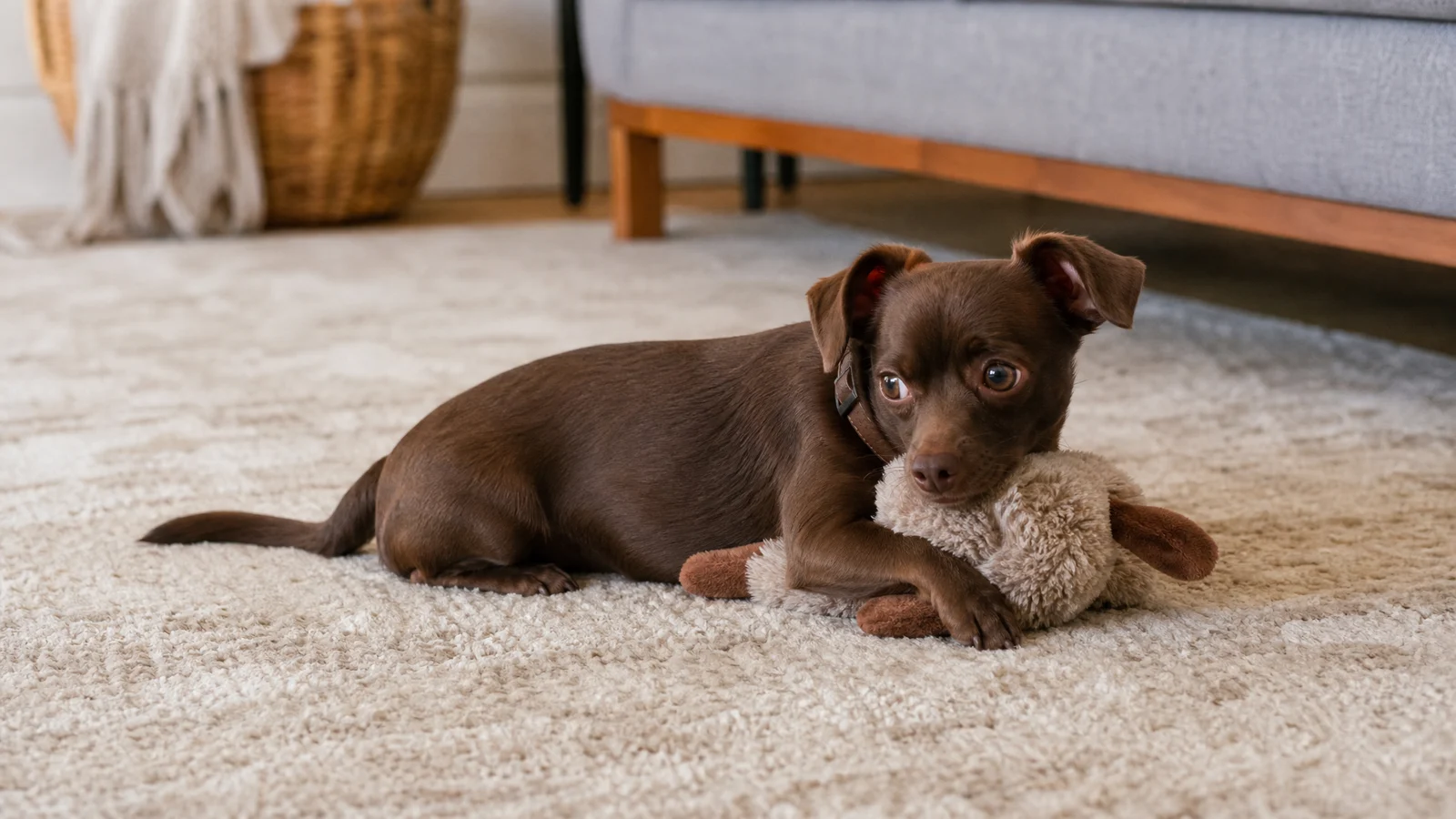
Reaching for a toy can change an otherwise quiet moment with your Chiweenie. A dog who was chewing comfortably may stop moving, stare or lower their head over the object. The absence of a growl does not make that invitation to put a hand closer.
Small size can make people underestimate the importance of possession. Yet a Chihuahua and Dachshund cross can value a toy intensely, just as a larger dog can. Picking up the dog or lifting the toy out of reach may end that encounter without teaching anything reassuring about your approach.
This guide separates situations that need space and professional support from suitable opportunities to teach a voluntary exchange. We will look at the approach, the release and what happens when the toy returns. A happy trade should leave your Chiweenie comfortable with the whole interaction, rather than merely emptying their mouth.
When Chiweenie Toy Guarding Means Stop
A stare over a toy deserves a pause before any training begins. Look at the dog's whole response, including whether their body has become still and whether they track your hand. You do not need to provoke a stronger signal to establish that the present approach is uncomfortable.
Use the current behavior to choose your next action. This distinction keeps an ordinary practice exchange separate from an active guarding incident.
| Current Situation | Appropriate Next Action |
|---|---|
| The dog is loose, interested in you and comfortable leaving an ordinary toy | Consider a simple voluntary exchange in a quiet, adult-managed setting |
| The dog becomes still, hovers over the toy or watches your reach closely | Stop approaching and give space rather than testing another reach |
| There has been snapping, biting or repeated guarding around people | Manage separation and arrange qualified behavior support before practicing trades |
| A child or another dog is near the valued toy | Separate the participants calmly and have an adult manage the environment |
Keep children out of exchange practice even when the toy seems ordinary. They should get an adult instead of reaching, chasing or offering food beside a guarded object. The adult's first job is to create space. A useful household rule does not depend on a child recognizing every subtle change in the dog's posture.
Regular veterinary visits provide an opportunity to discuss behavior changes as well as routine care. If guarding is new, worsening or accompanied by changes in movement or handling tolerance, describe the pattern to your veterinarian. The veterinary behavior specialist directory can also help you identify appropriate professional support.
Possession Without a Toy Guarding Contest
Start by making ordinary toy time less vulnerable to interruption. Give your Chiweenie a comfortable, clearly identifiable place away from household traffic, with enough room for people to pass without leaning over them. A dog resting beside a doorway may experience far more close approaches than anyone intended.
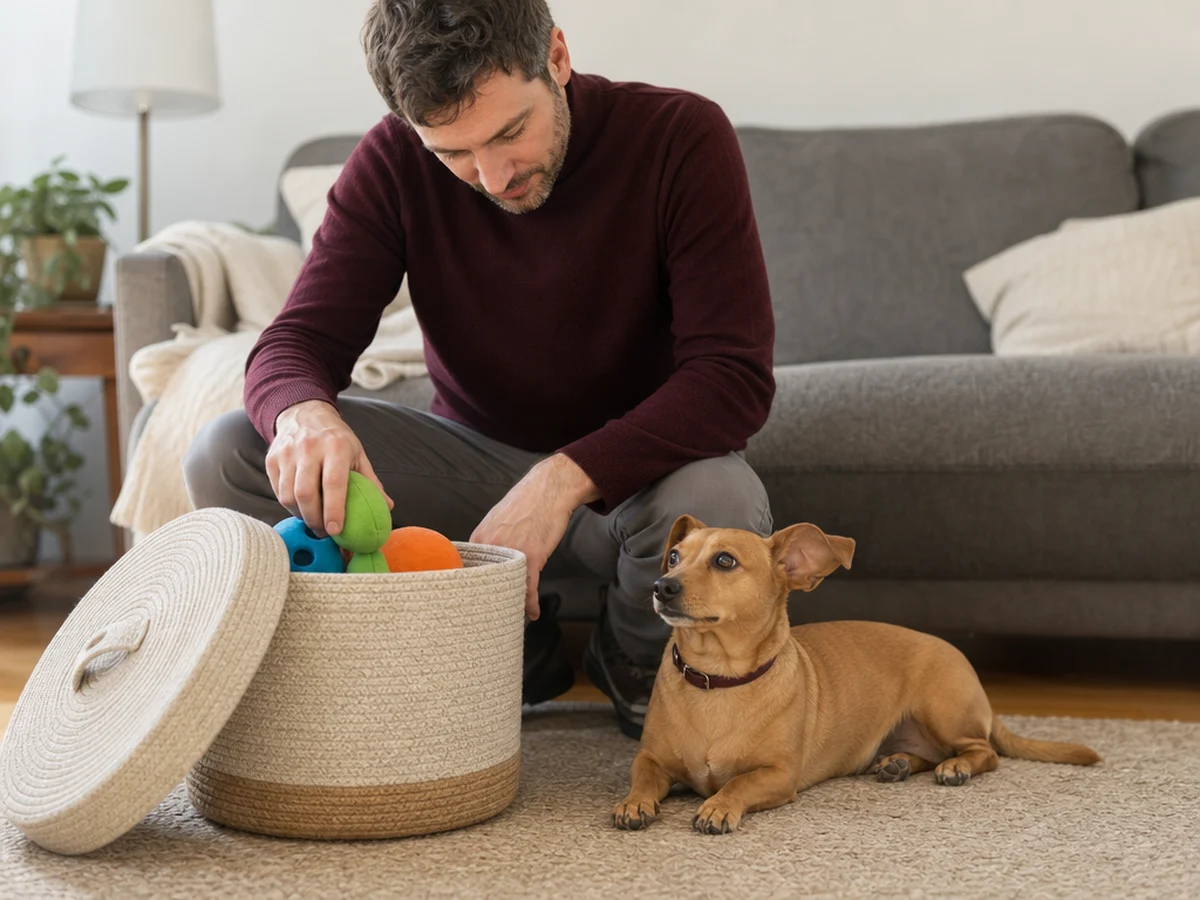
A Place the Household Can Respect
Choose the location before handing over the toy. Keep other dogs from entering to investigate, and make sure family members understand that the resting dog will be left alone. This is management of the situation, not a claim that space alone changes an established guarding response. If the space cannot stay undisturbed during a busy household period, arrange toy time somewhere quieter instead of repeatedly moving the dog.
Small dogs often fit into corners that are awkward for people to reach. Avoid creating a toy station beneath furniture where every necessary interaction becomes a crouching approach with an outstretched arm. A visible, accessible resting place makes it easier to notice the dog's behavior without intruding. The useful arrangement lets you pass at a comfortable distance and see whether the dog remains relaxed as normal room activity continues.
If your Chiweenie carries toys into bedding, the burrowing and nesting guide can help you arrange that space. Keep possession and blanket tidying separate. Invite the dog away comfortably before rearranging a bed, rather than pulling fabric from around a toy they still value.
Fewer Unnecessary Collections
Consider which objects actually need retrieving. A suitable toy in a safe resting area can often stay with the dog, while damaged items need managing before they become the day's most valuable possession. Check toys during ordinary cleanup when your Chiweenie is elsewhere. Keep a suitable replacement available for the next play opportunity so removing worn items does not leave the dog with nothing appropriate to use.
- Put unsuitable household objects out of reach before offering toy time, reducing urgent retrievals later.
- Provide separate spaces for dogs who enjoy toys, with adult supervision of access between those spaces.
- Let safe play finish naturally when possible, instead of repeatedly collecting a toy to see whether the dog will allow it.
An Approach That Reduces Toy Guarding Pressure
Your approach has a history from the dog's perspective. If people usually arrive to remove something, a Chiweenie may watch their movements closely before a hand even reaches down. Changing that expectation requires care, especially when an approach already produces tension. Repeatedly walking closer is not a useful test.
Guidance on recognizing resource guarding includes quiet changes such as stiffness as well as obvious warnings. For a dog who shows those signs, discuss a suitable plan with a qualified professional. Their assessment can determine how to work at a comfortable distance without rehearsing another confrontation.
In ordinary interactions with a relaxed dog, notice whether you can simply pass without collecting anything. Keep your hands to yourself and allow the dog to continue their activity. Household predictability starts with these unremarkable moments, long before you ask for a more demanding exchange. Ask other adults to follow the same approach, because reassurance from one person cannot make every different household interaction predictable.
A Chiweenie's low position also changes the geometry of an approach. Standing over a tiny dog while bending toward their mouth can fill much of their view. Give them a clear route away and avoid surrounding them with people. Comfortable participation is easier to judge when the dog has room to move.
Voluntary Toy Exchanges for a Relaxed Chiweenie
Practice belongs in a different moment from active guarding. Choose an ordinary toy your dog handles comfortably, and work where children and other animals cannot interrupt. If the dog stiffens, hovers or stops participating freely, end the attempt by giving space and seek guidance before repeating it.
The Toy Can Be Left Behind
First look for a willing departure from the toy. Offer a reward your dog likes at a distance that lets them move fully away, without your hand entering the space around their mouth. Allow them to finish moving before you consider touching the object they left. Choose your own position so you can deliver the reward without blocking the dog's departure or trapping them between your legs and the toy.
Advice on trading valued objects emphasizes a worthwhile alternative and giving the dog space to leave the item. For suitable practice, return a safe toy afterward. That lets the interaction include continued enjoyment rather than ending every exchange with permanent removal.
Watch the whole departure. A dog stretching toward food while keeping their body over the toy has not comfortably left it behind. Do not use the distraction to reach underneath them. Move back, allow space and reconsider whether this is an appropriate practice object or whether professional guidance is needed.
Plan what you will do with the toy before beginning. If it is safe to return, leave a clear place for that return. If it must be put away, have the storage ready so the dog is not following your hands around the room while you decide where the object belongs. This preparation also helps another caregiver understand whether they should leave the room quiet or prepare a different activity elsewhere.
The Cue Describes an Easy Action
Once an exchange is relaxed and predictable, a short word can accompany that familiar action. Say it once in the easy setup, then let your Chiweenie make the movement they already understand. Reward the release and departure without adding a hurried hand movement toward the toy.
Adults should use the same exchange word. Keep the position and reward familiar while the cue is new, saving a busier room for later.
A worthwhile reward supports cooperation. Do not reduce its value simply to prove that your Chiweenie understands the exchange word.
After a Chiweenie Toy Trade
The return to the toy gives you information the release alone cannot provide. A dog who takes the reward but then rushes back, covers the object or watches your hands may still find the interaction worrying. Count comfort before and after the exchange, rather than recording only that you obtained the toy.
What Happens When Play Resumes
When returning a suitable toy, place it where your Chiweenie can choose to approach without reaching past you. Then give room for normal play. Avoid hovering to inspect the response, since your continued proximity can become another part of the interaction the dog must manage.
- Look for a loose return to play, with the dog free to choose the toy or another activity.
- Notice whether your next ordinary movement changes their posture, even if you are no longer approaching the object.
- Stop increasing difficulty when the dog begins monitoring hands, retreating with the toy or leaving the exchange reluctantly.
Comfort with an ordinary toy does not establish comfort with a treasured possession. Keep practice easy, and obtain guidance before tackling objects connected with guarding.
Household belongings need access management. Our guide to unwanted Chiweenie chewing explains prevention, so successful trades do not become an excuse to leave tempting objects within reach.
If a dangerous object is involved, contact your veterinarian promptly for guidance rather than treating the incident as a practice opportunity. Protect people from an unsafe reach while arranging help. Future prevention and a professionally planned retrieval strategy matter more than demonstrating a cue in an emergency.
A Gentle Priority for Toy Guarding
For the next two weeks, make fewer unnecessary approaches your first household priority. Arrange safe toy spaces, keep children out of retrievals and record the situations that cause tension. Where exchanges are appropriate, favor easy, voluntary participation. Where they are not, use that information to obtain qualified support.
Two weeks is a review point, not a promise that guarding will disappear. A useful change may be a calmer approach, a more willing departure or simply a household that stops creating avoidable conflicts. Let your Chiweenie's comfort determine the next step, with continued space around the possessions they find difficult to share.
 BehaviorRamps and Rewards for a Chiweenie Who Leaps Off the Sofa
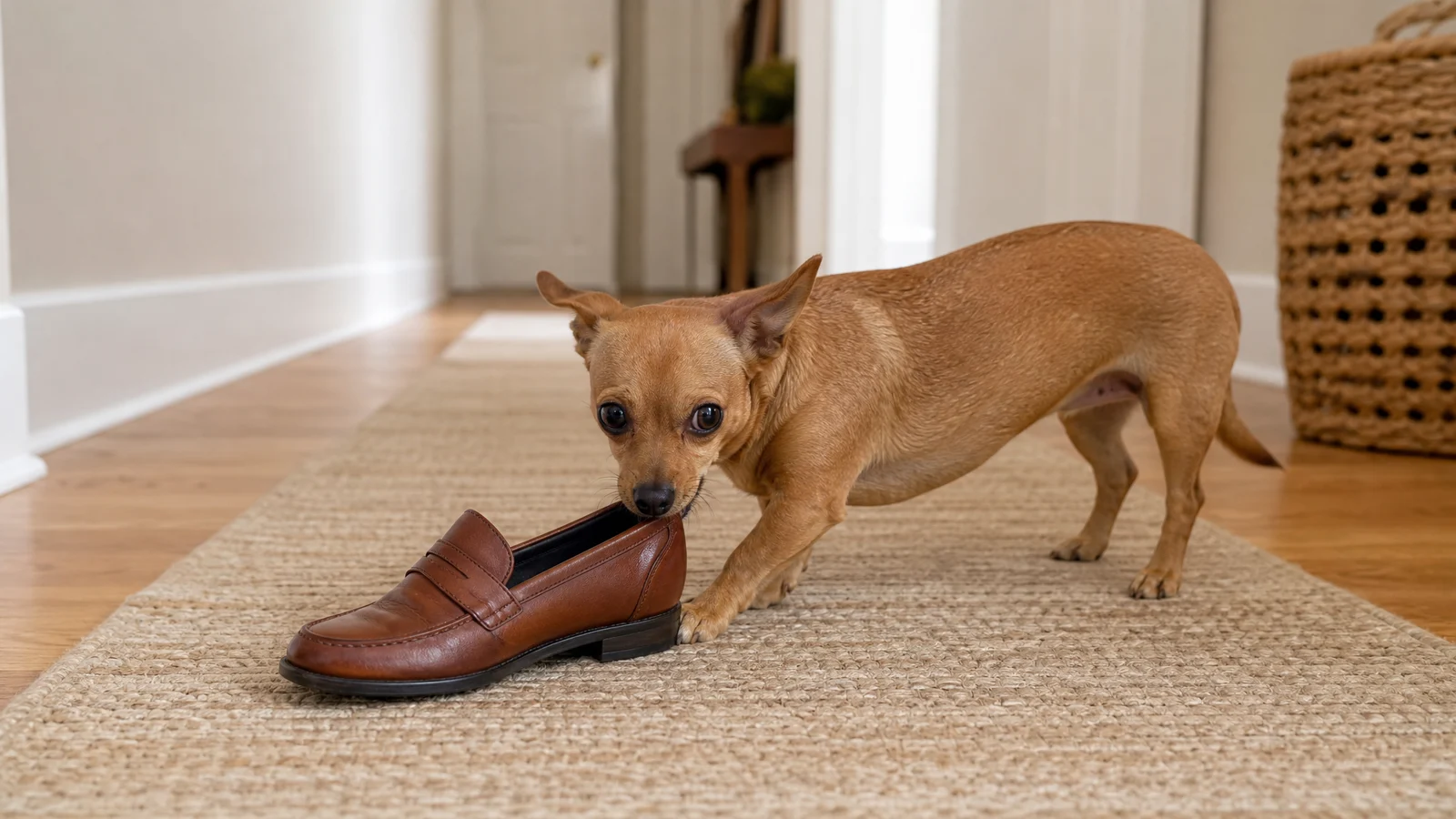 BehaviorA Chiweenie Who Chews Everything: Redirecting to Toys
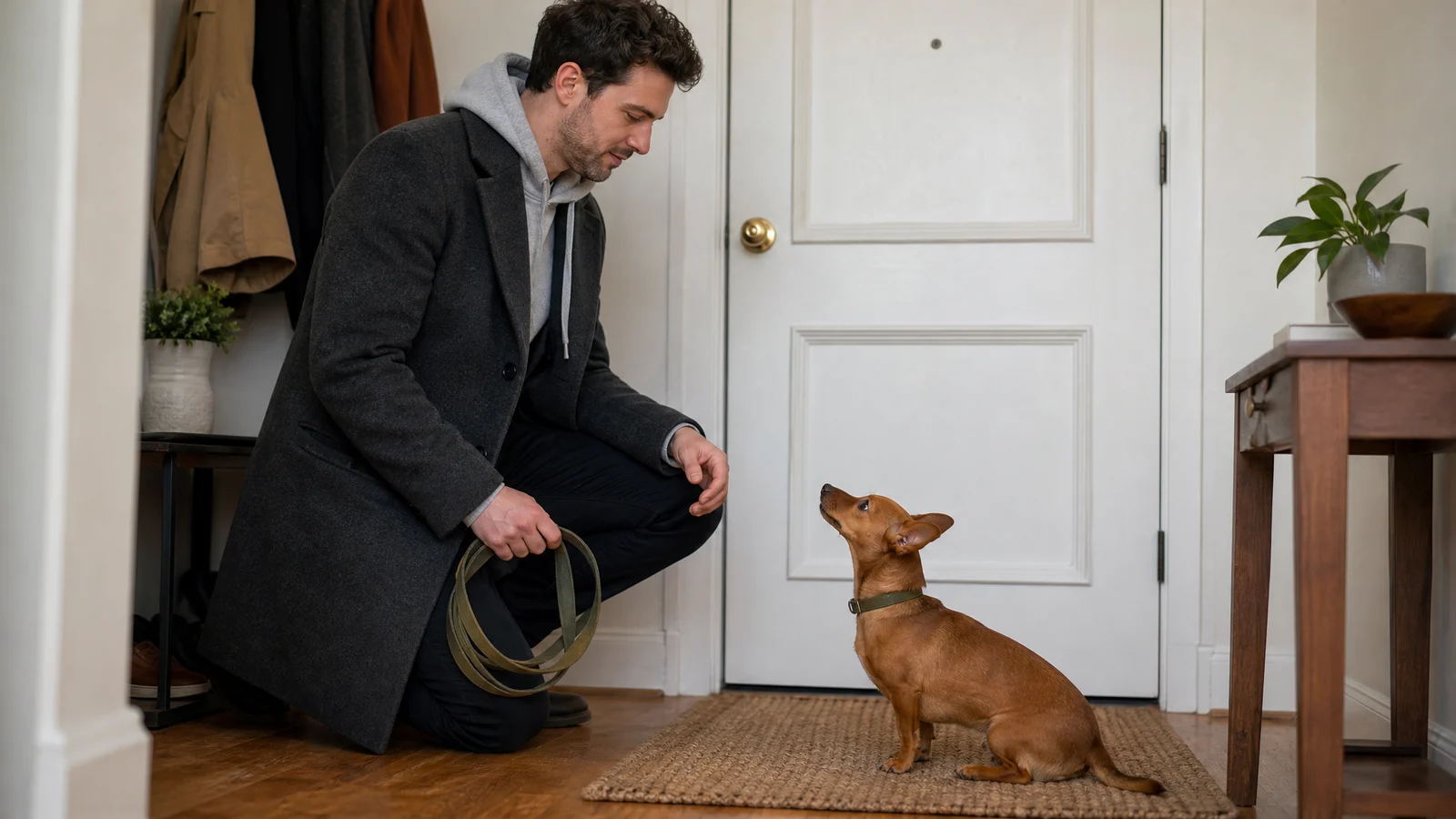 Puppy trainingKeeping a Teenage Chiweenie's Cues Reliable at Eight Months