 Chiweenie

A Chiweenie may disappear into a blanket whenever a resting spot becomes available, or prefer to sleep stretched out in the open. Both preferences can fit this cross. Having a Dachshund parent makes burrowing understandable, but does not tell you what your particular dog needs from a bed.
The useful distinction is between arranging somewhere comfortable and repeatedly damaging fabric, searching the room or trying to get beyond a boundary. Those actions can look similar when all you notice is moving paws. Watch what happens after the digging before deciding which habit to change.
Below, we separate the blanket nest from the torn cushion and the outdoor hole. You can then choose a permitted resting place or digging area, reward the use you want, and recognize when another explanation needs attention. The aim is a workable home with room for a Chiweenie's preferences.
Burrowing Has a Place in Chiweenie History
The Dachshund was developed for work below ground, with a long, low build suited to that job. The Dachshund parent's background gives some context for a cross who investigates bedding with their nose and front paws. History makes a behavior plausible. It does not prove that every movement under a throw comes from the same instinct.
Chihuahua ancestry matters, too. Crosses vary in build, coat and resting preferences, so neither parental background determines exactly how your dog will use a blanket.
Start with your dog's own sequence. Do they nudge a loose edge, turn around and settle, or continue pulling and searching after the resting place is ready? The finish tells you more about the practical problem than how enthusiastically the paws moved at the beginning.
Describe the result plainly to other caregivers. “Rearranges, then sleeps” suggests a resting preference, while “pulls out threads” calls for access management and a closer look.
A Chiweenie Nesting Sequence Worth Watching
Observe while your Chiweenie is relaxed and you can supervise without crowding them. Give them access to their usual permitted resting place, then watch the approach, the rearrangement and the result. You do not need to prompt burrowing or place the dog beneath a blanket to discover whether they enjoy it.
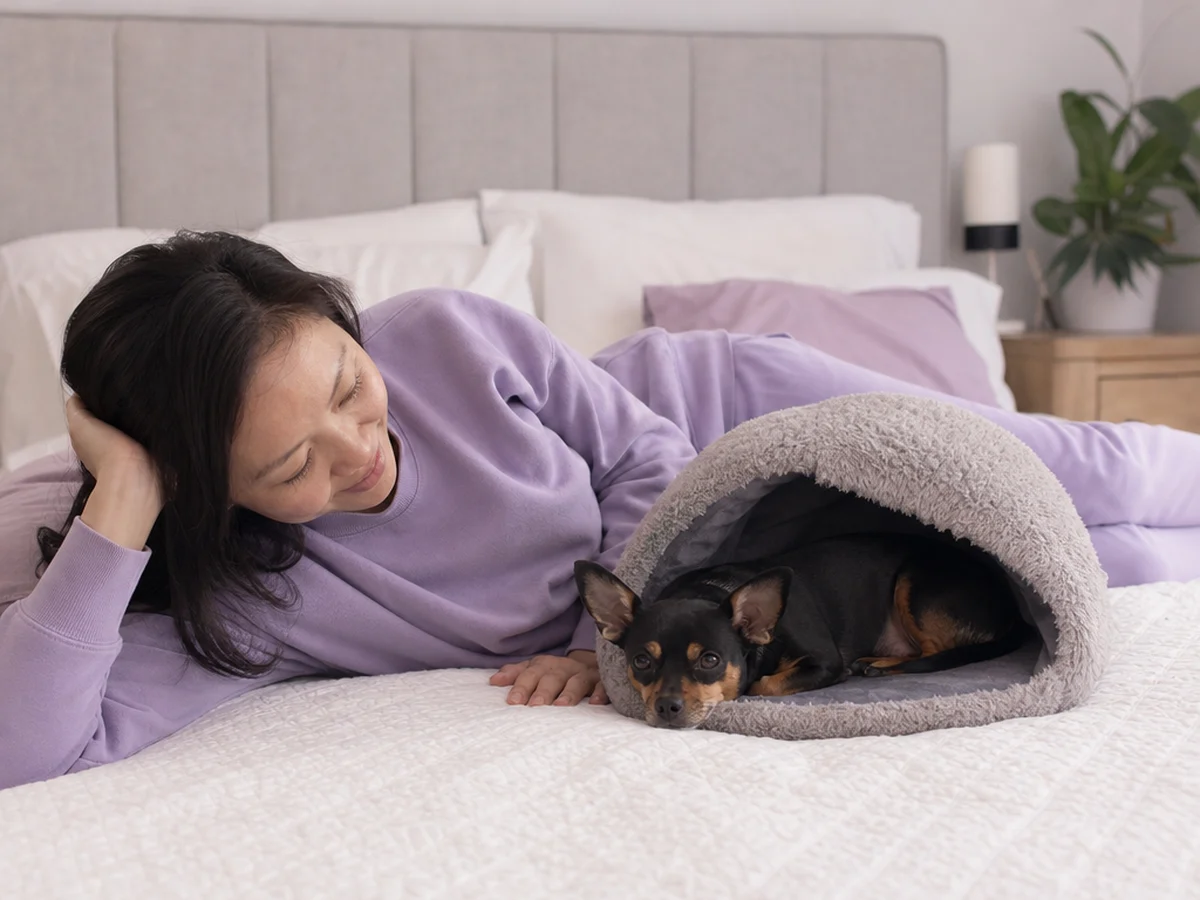
Keep the observations simple. A short note can reveal whether the same surroundings reliably lead to sleep.
- Notice which surface the dog chooses and whether they seek a loose edge, a soft hollow or proximity to you.
- Watch whether their body relaxes after rearranging the bedding or whether the searching continues without a comfortable finish.
- Check whether a household interruption changes the behavior, such as someone approaching the bed or moving the blanket.
The distinction matters especially when a small Chiweenie is easy to overlook under a throw. Everyone sharing the seat should know where the dog is before sitting down or gathering laundry. A clearly identified dog bed can make their location easier to recognize while still allowing the resting choice they enjoy. Everyone should check the resting place before moving a cushion, including visitors who may not know that the blanket conceals a dog.
Do not treat stillness as permission to touch. Call your dog into the open before moving their bedding, and reward their arrival where you can see them. If approaching a resting Chiweenie causes tension or snapping, our guide to snapping triggers addresses that separate concern.
A Chiweenie Burrow Bed With Clear Edges
A useful burrow bed makes the preferred activity available in a place you can supervise and maintain. Choose bedding your Chiweenie can enter and leave freely. Keep the opening clear, check the material for damage, and remove fabric if the dog starts tearing or swallowing pieces instead of settling.
Place the bed where resting already makes sense. A hidden corner far from the family may compete poorly with the couch if your dog mainly wants company. Equally, a bed beside a busy doorway may prevent sleep because every person passing interrupts the nest. Adjust the location to what your observations show. Try a location that preserves the company your dog seeks while giving them room to sleep without a stream of passing feet.
Reward your Chiweenie for investigating and resting in that space. Deliver the reward without dismantling the blanket arrangement or repeatedly asking them to get up. You are making the chosen bed worthwhile, not turning every nap into an obedience exercise. Calm access to a comfortable spot is part of the result.
Leave an uncovered resting option available. Your Chiweenie can choose a different bed later without undoing the lesson about where resting is welcome.
Burrowing and Damage Need Different Responses
Once the resting place is usable, distinguish what you are trying to preserve from what needs changing. Digging motions can be part of nesting, but fabric damage, repeated searching and departure-related activity call for different observations. The table helps you choose the next question without assigning an explanation to your Chiweenie.
| What You See | What to Check Next | Useful First Adjustment |
|---|---|---|
| Blanket rearranging followed by sleep | Whether the bedding remains intact and the dog can leave easily | Keep a clear, supervised resting place available |
| Tugging, shredding or carrying fabric away | Whether the dog is seeking something to chew rather than a nest | Remove damaged material and offer a suitable chewing activity |
| Searching around doors during departures | Whether the behavior clusters around being left | Review the absence routine with professional help if distress appears |
These are starting points rather than labels. A Chiweenie can enjoy nesting and also chew a blanket, so one explanation does not exclude another. Supervision lets you respond to the actual action instead of leaving the same setup in place because it worked during yesterday's nap.
When chewing takes over, move the activity onto something appropriate for the dog's mouth and chewing style. The separate Chiweenie chewing guide explains that choice. Changing the blanket alone may leave the reason for seeking an object untouched.
Outdoor Digging Clues for a Chiweenie
Outdoor digging is not simply indoor burrowing moved into the yard. The location and timing matter. A hole beside a boundary, a resting hollow in shade and scattered excavation during unoccupied time can point toward different needs. Look at the whole scene before choosing a permitted outlet for your Chiweenie.
Veterinary behavior guidance describes different reasons for digging, including comfort, enjoyment and distress. That supports an observation-first approach. A digging patch is useful for a dog who likes excavation, but it does not replace attention to an uncomfortable resting environment or anxiety around departures.
Walk the yard before inviting the dog out. Check places they have already disturbed and supervise access to areas where another hole could create an escape route. A small Chiweenie may investigate spaces a person barely notices, so the relevant view is close to the ground as well as along the top of a fence. Recheck that ground after your dog has used it, since digging can alter a gap that seemed secure when you first went outside.
Keep regular veterinary checkups part of their care, and mention a new or persistent change in behavior. Bring the context you recorded rather than only the word “digging.” When it happens, what precedes it and whether your dog can settle afterward give the discussion a more useful starting point.
Teach a Permitted Chiweenie Digging Area
If the dog enjoys digging even when their other needs are being met, a clear outlet can make the household boundary easier to teach. Guidance on an approved digging area combines access management with rewards for using the permitted place. Both parts matter for a curious Chiweenie.
Make the allowed area distinguishable from the ground you want left alone. Choose a supervised location and suitable material, and check the space before use. Avoid a setup where the dog must pass through a prized planting bed to reach the place where digging is encouraged.
- Bring your Chiweenie to the permitted patch while they are available to investigate, rather than waiting until another excavation is well underway.
- Let them discover a safe toy partly concealed in the suitable material, then praise and reward their interest in that location.
- End with the dog still able to come away with you, and restrict access to the areas where digging remains unsuitable.
Reward the location as well as the activity. If the dog leaves the patch and starts elsewhere, guide them away from that opportunity and make the permitted area clearer next time. Repeated access to every part of the yard leaves the distinction uncertain, however rewarding your chosen patch may be. If you cannot supervise the distinction, limit access until you can help the dog choose the permitted ground again.
Household Interruptions Without Burrowing Battles
A resting Chiweenie should not have to defend a nest whenever someone wants a blanket. Build a predictable way to invite them out before the bedding needs moving. Practice while the dog is already relaxed, with a reward placed where they can emerge and approach you without being reached over.
Children need a separate, simple boundary. They should ask an adult to help when the dog is hidden or resting.
- Keep a permitted dog resting place identifiable, so someone tidying the room knows to check before lifting a blanket.
- Invite the dog into view before moving the bed, then return access when the household task is finished.
- Give another comfortable place to rest when visitors or cleaning make the usual location too busy.
Watch whether the invitation remains comfortable for the dog. A Chiweenie who hesitates, stiffens or retreats beneath the fabric needs more space, not a closer reach. Pause the interaction and review the arrangement. The goal is a dependable household routine in which approaching people do not always predict the loss of a valued spot.
Comfortable Burrowing Can Remain a Chiweenie Habit
You may never turn a blanket-loving Chiweenie into a dog who prefers an uncovered bed, and there is no need to make that the objective. Keep the enjoyable behavior available where the materials, access and supervision work. Change the arrangement when the activity becomes destructive or the dog no longer settles comfortably.
Over time, look for an easier pattern: your dog chooses a permitted place, can come out willingly and has useful activities beyond rearranging bedding. A safe nesting space and a clearly managed digging outlet can accommodate an individual preference without asking the whole household to work around unpredictable damage.
 BehaviorTeaching Your Chiweenie to Sound One Alarm at the Window and Stop
 BehaviorHappy Trades for a Chiweenie Who Guards Toys With a Stare
 BehaviorRamps and Rewards for a Chiweenie Who Leaps Off the Sofa