 Chiweenie
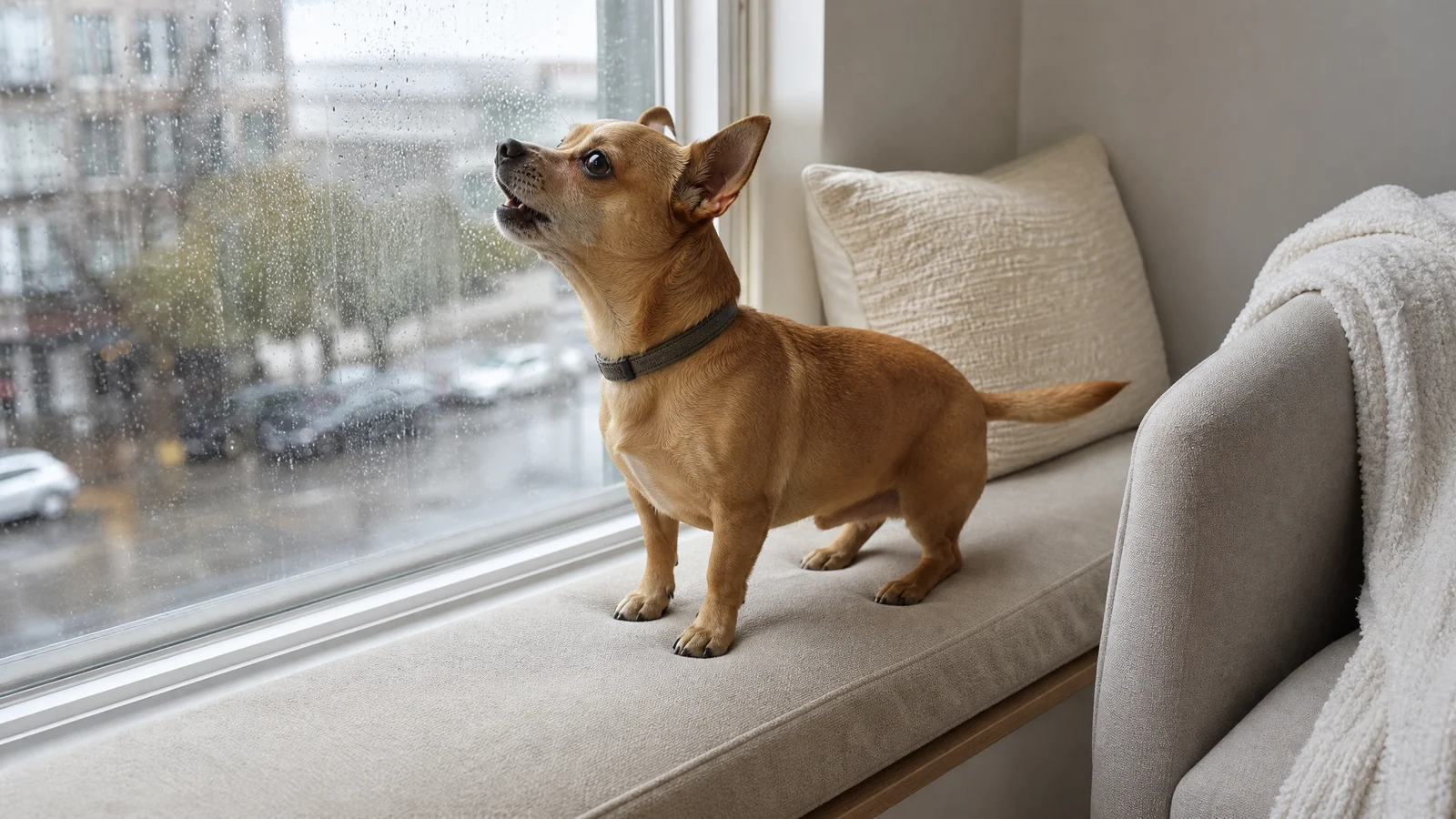
A passerby disappears whether your Chiweenie stops barking or keeps going. From the dog's side of the glass, that can make a loud alarm look successful before you have offered any guidance. Calling from the kitchen afterward leaves you trying to interrupt a sequence the window has already made rewarding.
The useful lesson is a small change within that event: notice movement, turn toward you, collect a reward away from the glass, then recover. In this guide, we practice the separate pieces before joining them at an easy window. Some Chiweenies are naturally quiet and others are vocal, so the target is a manageable response to passersby rather than a promise of complete silence.
How a Chiweenie Window Alarm Unfolds
Window barking has a location, a trigger and an ending. Mapping those parts helps you find a point where your Chiweenie can still learn. Waiting for the loudest moment and then repeatedly calling their name skips the earlier opportunities to reward noticing calmly or moving away before the alarm gathers momentum.
Find the Actual Trigger
Watch what catches the dog's attention before the first bark. It may be a person crossing the view, a delivery near the door or movement that appears suddenly close to the glass. Identify the version you can make easier, such as a farther view from deeper in the room.
Do not assume every sound in the same room has the same purpose. Chiweenie owners describe quiet dogs as well as dogs who vocalize during interactions, at screen images or in response to particular sounds. Those patterns make it worth separating the passing person from the television noise beside the window.
Advice on understanding barking functions starts with the reason for the noise. For this lesson, choose the visible passerby. If the dog also barks for company or play, handle that in another practice context so one window routine is not expected to explain every vocal behavior.
Window height changes the setup for a small dog. A Chiweenie watching from a couch may have a different view from the same dog standing on the floor. Record the starting position, too. Otherwise a practice that appears easier may actually put your dog closer to the most exciting part of the street. Check whether a chair or cushion creates a lookout that remains available when you thought the view was limited.
Locate the Recoverable Moment
Look for a moment when your Chiweenie can glance toward the view and then orient elsewhere. That moment might happen before any bark, or after a brief alert. It gives you an action you can reward. A dog fixed on the glass and unable to turn needs an easier setting.
“One alarm” describes the direction of training. Quiet noticing earns a reward, too, so never prompt a bark just to start the exercise.
Quiet Skills Before Chiweenie Window Barking
The turn toward you and the comfortable place afterward should already make sense before a passerby appears. Teach those pieces away from the busy view. This gives your Chiweenie familiar actions to perform later, instead of presenting a new cue at the same moment that movement outside takes over their attention.
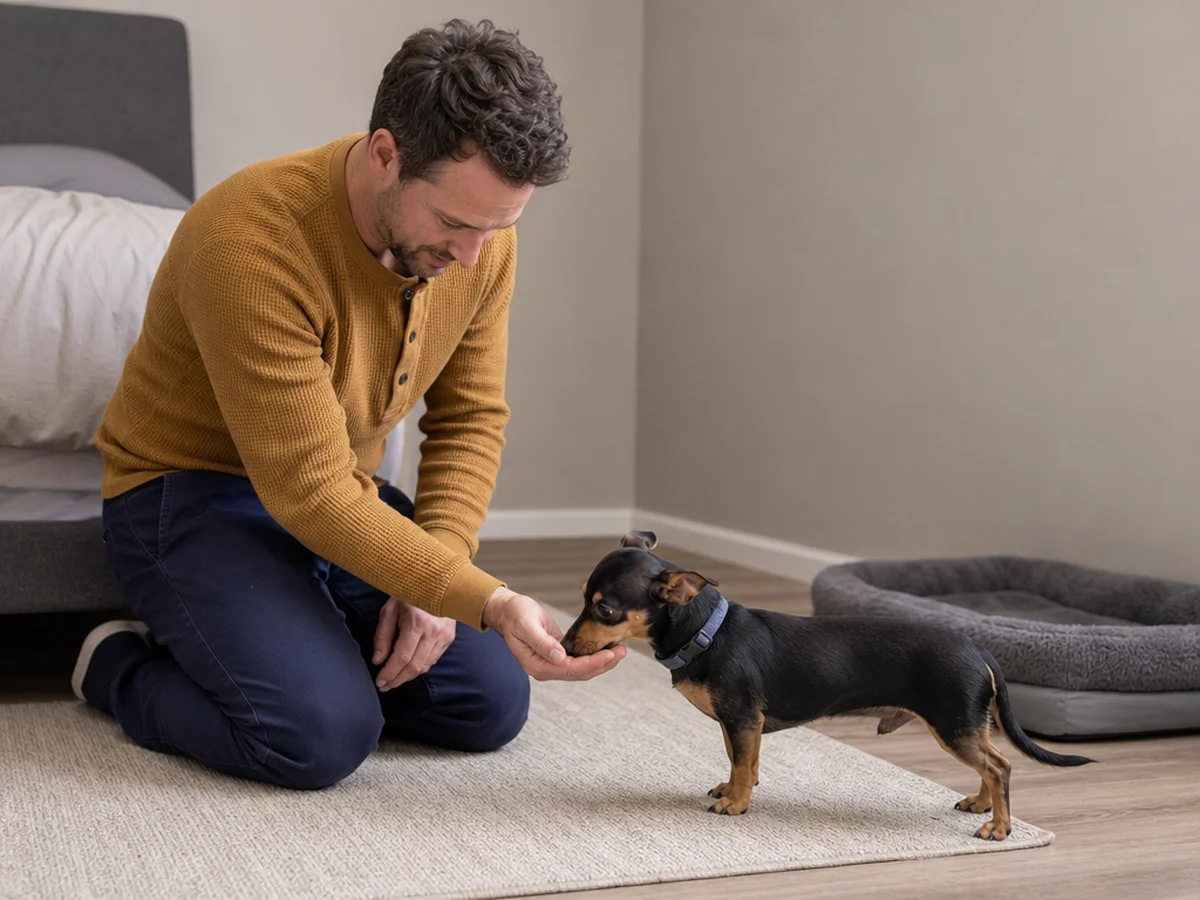
A Turn That Leads Somewhere
Begin in a quiet part of the room. Say the short cue you intend to use, then acknowledge their change of direction with your marker and offer a nearby reward. Keep your position easy to reach, without furniture between you and the dog or a looming reach over their head.
After the turn becomes familiar, reward a little farther from the starting place. Your dog learns that orienting to you opens a route away from what they were watching. The reward should arrive where you want them to finish, rather than sending them straight back to the window for another look. Try the delivery position yourself before practice, checking whether you can offer the food without stepping toward the view and drawing the dog back.
Use your usual marker and reward language consistently. Our Chiweenie foundation training guide explains those basics. A small Chiweenie can learn the same clear information as a larger dog, even when you need to adjust your hand position and the distance between practice points.
A Quiet Landing Place
Choose a place away from the glass where your Chiweenie can pause comfortably after approaching. It might be a mat or simply an open part of the floor. The useful feature is that another glance outside is not the easiest next action as soon as the reward is swallowed.
Reward relaxed pauses there during ordinary room time. Sometimes release your dog back to another quiet activity, and sometimes remain nearby while they settle. That variation keeps the landing place from becoming only a brief stop on the way back to window duty. A dog who looks comfortable while you sit nearby may need an easier version when you stand up or begin moving around.
Let the familiar cue guide the movement. Bring out the reward after the response when possible, so visible food does not become the only reason to turn.
Joining the Window Barking Sequence
Now bring the familiar turn closer to the window without restoring the full challenge at once. Reduce the view or practice from farther inside. A Chiweenie who notices distant movement and can still respond gives you a better starting point than a dog already pressed against the glass.
Work with an ordinary, manageable passing event. Keep the sequence simple enough that your timing does not depend on remembering several different commands.
- Notice the first orienting movement toward the passerby, and allow your dog space to observe without approaching the glass.
- If they remain quiet, mark that response and invite them toward you. If a brief alert happens, use the familiar cue as soon as they can respond.
- Mark the turn or quiet pause you wanted, then deliver the reward at the landing place away from the window.
- Allow a calm recovery before offering another view, and reduce the challenge if your dog immediately rushes back into barking.
Pay for the Response You Want
Timing tells your Chiweenie which part of the event mattered. Marking the head turn makes that action clearer than waiting until you have searched a pocket while the dog resumes barking. Keep rewards ready before practice so you can respond to the behavior you actually intended to teach.
Attention to you also counts. Reward that choice and finish comfortably, without sending your Chiweenie back to find something worth barking at.
Leave Time for Recovery
After the reward, observe what your dog does without another cue. Can they remain away from the glass, or do they return immediately to search for the next passerby? The answer tells you whether the event was manageable. A successful turn alone does not show that the whole routine is comfortable.
Make the recovery quieter by limiting the view again, moving farther into the room or ending the practice. An alert Chiweenie does not need a continuous series of people to learn the pattern. Useful repetitions include a clear finish, not just a rapid succession of interruptions.
When a Window Barking Rehearsal Breaks Down
A failed repetition identifies a missing link, rather than proving that your Chiweenie refuses to listen. Look at where the sequence changed. The adjustment for a dog who never turns differs from the adjustment for a dog who approaches easily and then races back to the glass.
Change the Difficult Part
Alter one useful feature before trying again. A smaller view, an easier passerby or a quieter starting position gives you information about what made the earlier attempt difficult.
| Point of Difficulty | What It Suggests | Next Rehearsal |
|---|---|---|
| The dog cannot turn toward you | The view is more demanding than the practiced skill | Move away from the window and refresh the turn separately |
| The dog turns but barks again beside you | The landing place still exposes them to the trigger | Choose a position with less view and more recovery space |
| The dog eats and returns immediately | Leaving the glass has no clear finish yet | Practice a relaxed pause before reopening the opportunity to watch |
Reward value matters, but more exciting food cannot make every setting teachable. Some Chiweenies need the passing movement reduced before they can use any familiar cue. Treat an inability to respond as information about the exercise, not as a reason to stand closer and repeat the same request more insistently.
Notice your own movements during the unsuccessful attempt. Leaning toward the glass, hurriedly crossing the room or speaking over the noise can change the event your dog experiences. Prepare your position before the next passerby, leaving a clear path from the viewing area to the reward location.
Check the Pattern Beyond Practice
If your dog rehearses window alarms whenever you leave the room, the short lesson competes with a much larger routine. Manage that view between practices with a suitable barrier or another comfortable resting position. Choose an arrangement your Chiweenie can use easily and that the household can maintain consistently.
Keep regular veterinary visits on the calendar, and discuss a sudden or unusual increase in vocal behavior. Record whether the change occurs only at the window or also during rest and ordinary interactions. That distinction helps you avoid treating every new sound as a training problem. A brief record of the setting and any accompanying changes gives that conversation a clearer basis than a total bark count.
For dogs who struggle with noise throughout the home, the broader Chiweenie quiet-settle article covers more than this window-specific sequence. Keep the present exercise narrow so you can tell whether the passerby routine is improving rather than judging the dog against every sound they make.
A Chiweenie Window Routine for Busy Days
On days with constant deliveries or heavy foot traffic, reduce the view and give your dog another useful activity before practice becomes a series of failures. Simple indoor scent searches offer a different use for attention. Prepare them away from the window so the dog can investigate without repeatedly switching back to the street.
Daily play and suitable activity still belong around this lesson. Guidance on boredom and unwanted behavior reinforces the value of meeting those needs, although activity alone does not teach a window response. The practical goal is a Chiweenie who can notice a passerby, reconnect with you and return to ordinary room life.
 BehaviorHappy Trades for a Chiweenie Who Guards Toys With a Stare
 BehaviorRamps and Rewards for a Chiweenie Who Leaps Off the Sofa
 BehaviorA Chiweenie Who Chews Everything: Redirecting to Toys