 Chiweenie
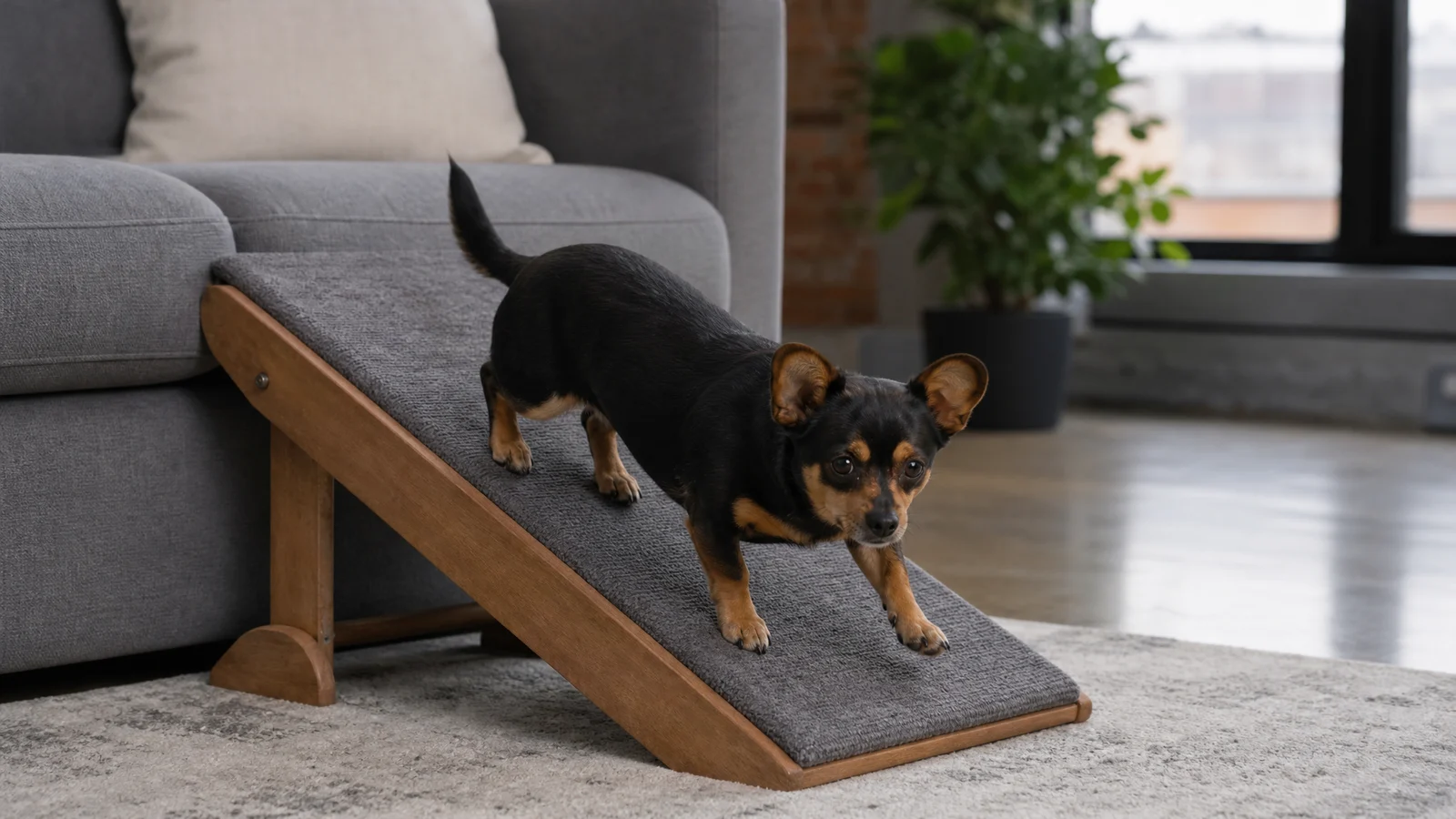
To reduce your Chiweenie's leaps from the sofa, first control when they can get onto it, then teach a dependable route down. A ramp beside the furniture does not automatically become the dog's preferred exit. The direct jump may still be familiar, faster or closer to the person they want to follow.
This guide treats that exit as a path you can inspect and teach, from the floor landing to the upper connection and the distractions that make a dog hurry. We also cover a waiting option for comfortable lifting. Chiweenies vary in body shape and mobility, so the arrangement should fit your dog rather than an assumed version of the cross.
Where Chiweenie Furniture Jumping Begins
Look at the furniture your dog already uses and identify the place they usually leave it. A Chiweenie resting against an armrest may launch toward the hallway rather than the open space beside the cushions. Putting a ramp at the opposite end can leave the familiar departure almost unchanged.
Observe during ordinary room activity while preventing an unwanted leap. Notice where people walk, where the dog expects food and which sounds bring them to the edge. This gives you a route to redesign. You are looking for a practical connection between a resting place and the destination below.
Until the alternative is reliable, manage access to the furniture. Close the room, supervise visits or provide a comfortable floor-level bed nearby. Keep the dog included in family life where possible. A sleeping area beside your chair may be more usable than a distant bed your Chiweenie leaves whenever you settle down.
A Route That Suits Chiweenie Furniture Access
A ramp, suitable steps or remaining at floor level are different arrangements, not interchangeable solutions for every dog. Consider the available space and your Chiweenie's actual movement. Long bodies and short legs may affect the route they find comfortable, but appearance alone cannot tell you which access is appropriate.
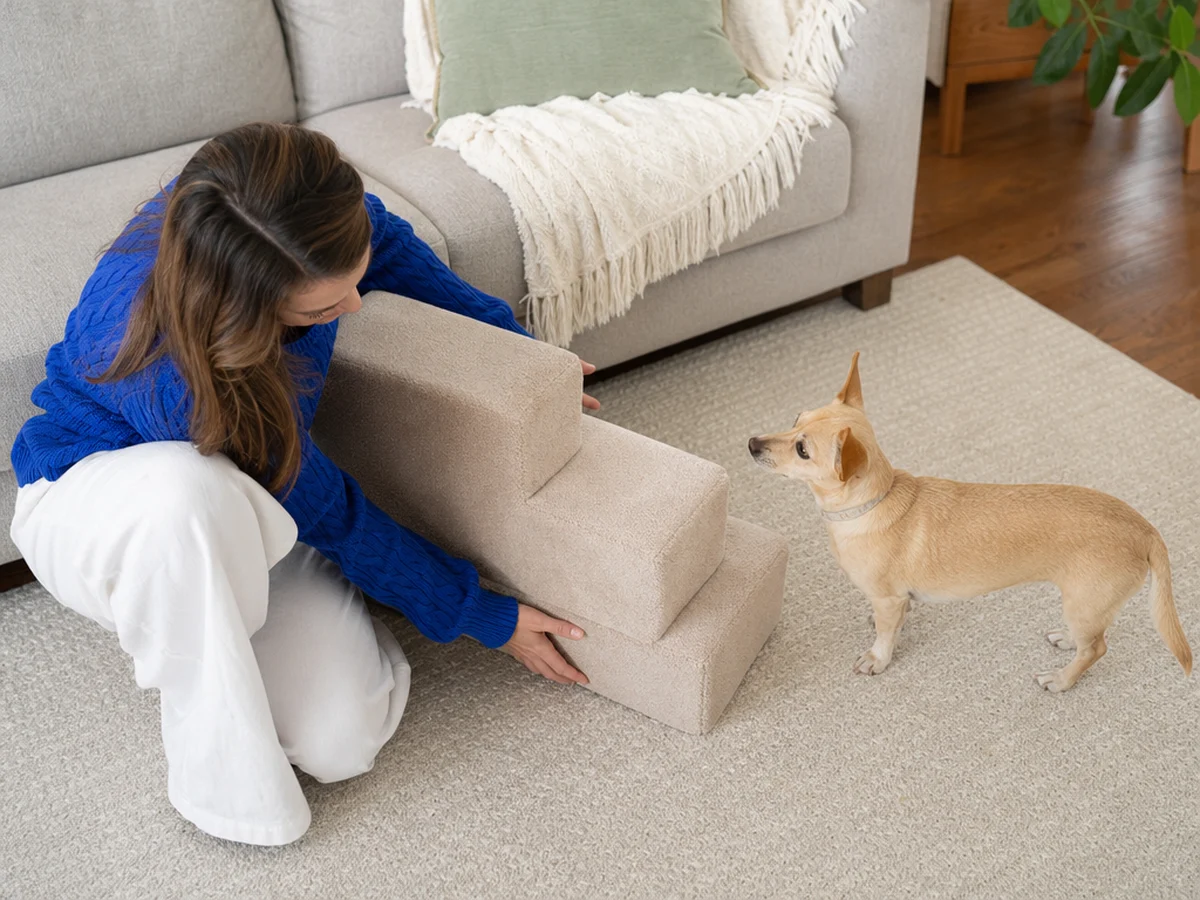
Guidance on supporting mobility at home includes sturdy ramps with secure footing. For a dog whose movement is restricted, discuss furniture access with your veterinarian before introducing it. Equipment should support an appropriate activity, rather than create access the dog should not currently use.
Choose an arrangement that stays stable during the whole crossing. Check the upper connection as well as the base, and follow the equipment's setup instructions. A surface that shifts when the dog steps onto it can make the next attempt harder, even if the rest of the ramp appears inviting. Check the fittings again whenever the furniture moves, rather than assuming that a previously secure connection has stayed in the same position.
- Allow enough room for a direct approach and departure, without squeezing between furniture and a wall.
- Check that the walking surface provides traction and that the connection cannot separate during use.
- Keep the route clear of blankets, cables and objects that could change the available footing.
- Choose floor-level rest when the furniture or room cannot accommodate a suitable access arrangement.
The Landing Below the Furniture
The route continues after the ramp ends. A small dog stepping onto a slippery floor may lose confidence in an otherwise stable setup. Look beyond the equipment to the space where your Chiweenie will turn, pause and move toward you after descending.
Advice about helping older dogs move includes improving traction on smooth floors. A secure rug can make a landing more usable, provided the rug itself does not slide or bunch. Inspect it after cleaning or rearranging the room, since the walking route may have changed.
Place rewards where the dog can collect them without a sharp turn at the bottom. Your position matters, too. Standing beside the ramp can draw your Chiweenie over the side before the crossing is complete. Leave a clear path forward so completing the route is the easiest way to reach you.
Ramp Footing Before Furniture Jumping Practice
Introduce the new surface in an easy, stable arrangement before asking for a full descent. Let your Chiweenie investigate without being placed on it or pushed forward. Mark voluntary interest, then reward small steps the dog offers comfortably. The first lesson is confidence in the surface, not speed.
If the equipment permits safe use at a very low height, begin there according to its instructions. Keep rewards close enough that the dog can take a manageable step rather than stretching beyond their comfortable footing. Return to an easier approach whenever the dog hesitates or tries to leave sideways.
Reward position can explain what the cue cannot yet tell them. Delivering a reward along the center of the route encourages a straight approach. Tossing food beside the equipment may instead teach the dog that leaving the surface is the quickest way to finish the task.
Look for comfortable crossings before increasing the challenge. Rushing across once and then avoiding the ramp suggests that your Chiweenie needs an easier opportunity, or a break from practice.
Keep another person from calling the dog during these early crossings. A familiar voice from the wrong direction can compete with the route you are teaching. Explain the practice before you begin, and let household members watch from a position that leaves the intended path obvious to your Chiweenie. Once the crossing is familiar, they can help rehearse ordinary household activity without introducing several competing calls at the same time.
The Upper Connection and Furniture Jumping
The point where the ramp meets the sofa can become a separate puzzle. Upholstery may compress, a blanket may cover the edge or the dog may need to turn before finding the surface. Inspect that transition from close to the dog's level, with the furniture arranged as the household actually uses it.
Work on the upper connection only after the lower route is comfortable and the setup is secure. Supervise closely enough to manage access, without using your hands to drive the dog forward. Keep the reward on the intended route and allow time for the dog to place their feet deliberately. If you cannot prevent access to an open edge while keeping practice comfortable, use floor-level rest and seek help planning the setup.
Teach descent as its own task. Walking up comfortably does not show that your Chiweenie finds the view and movement down equally easy.
Recheck blankets before practice. A throw can cover the upper connection after someone sits down, even when the route was clear earlier.
A Waiting Choice for Chiweenie Furniture Jumping
Some households also need a predictable way to help the dog down. That begins with waiting comfortably away from the edge, and it only works when the Chiweenie tolerates being handled. A small body is easy to lift physically, but that does not make an unexpected pickup comfortable for the dog.
Waiting Before Hands Approach
Teach the waiting place in an easy setting first. Reward the dog for remaining on a familiar spot while you stand nearby, then add small changes in your position. Use a clear release when the pause is finished, so staying still has a recognizable beginning and end.
Transfer the familiar pause to supervised furniture time with the dog safely away from an open edge. Keep the exercise separate from an exciting departure at first. Asking for a new wait when someone has just opened the kitchen door adds a competing destination before the skill is ready.
Lifting With Comfortable Participation
Signal your approach before touching, and watch the response. Guidance on reading canine body language describes tension and other signs of discomfort. If your dog stiffens, retreats or resists handling, pause and use management while obtaining suitable help instead of making repeated attempts.
Have your veterinarian demonstrate an appropriate supported lift for your individual dog, especially if their movement has changed. Keep regular veterinary checkups scheduled as part of that care. The training goal is a calm, predictable handoff that the dog can participate in comfortably, followed by secure footing on the floor.
Handling concerns deserve their own attention. The gentle Chiweenie handling guide explains household boundaries around a tiny dog. Adults should manage furniture assistance, while children ask for help rather than lifting a resting Chiweenie themselves.
Everyday Departures Without Furniture Jumping
Once the route works in a quiet room, consider what normally makes your dog leave the sofa quickly. Someone standing up, a familiar cupboard opening or activity near the hallway may be more difficult than the crossing itself. Add those events carefully while keeping the physical route unchanged.
Begin with a mild version of the movement. An adult can shift position without leaving the room, giving the dog a chance to remain settled or use the practiced route. Reward the useful choice. A full dash toward the kitchen asks much more than that small first change. Repeat the easier version on another occasion before increasing it, using your dog's comfortable response as the basis for that choice.
- Keep the landing clear before adding any household distraction to the practice.
- Reward use of the complete route, including a controlled finish on the floor.
- Reduce the distracting event when the dog starts looking for a shortcut over the furniture edge.
End the rehearsal while you can still supervise the next departure. One successful crossing does not remove the need to manage access later. The arrangement becomes dependable through repeated comfortable use in the situations your household actually encounters.
Shared Furniture Rules for a Chiweenie
Everyone should know whether the dog currently has supervised furniture access, uses a trained route or rests at floor level. Conflicting arrangements create avoidable practice of the old jump. Keep rewards available to the adults helping with the lesson, and show them where to stand when inviting a descent.
Build the furniture lesson into suitable daily activity instead of treating repeated crossings as exercise. Our Chiweenie activity guide covers the wider routine. Here, the aim is a reliable way between resting places, with enough attention left for careful movement.
The First Furniture Change Today
Choose one frequently used seat and inspect the entire exit, including the floor beyond it. Set up a comfortable alternative while you teach the new route, then reward deliberate crossings and predictable waits. Keep other furniture managed until you can give its access the same attention. A usable path begins with the room you have and the Chiweenie in front of you.
 BehaviorA Chiweenie Who Chews Everything: Redirecting to Toys
 Puppy trainingKeeping a Teenage Chiweenie's Cues Reliable at Eight Months
 Training basicsCan Chiweenies Be Easy to Train? A Temperament Test