 Chiweenie
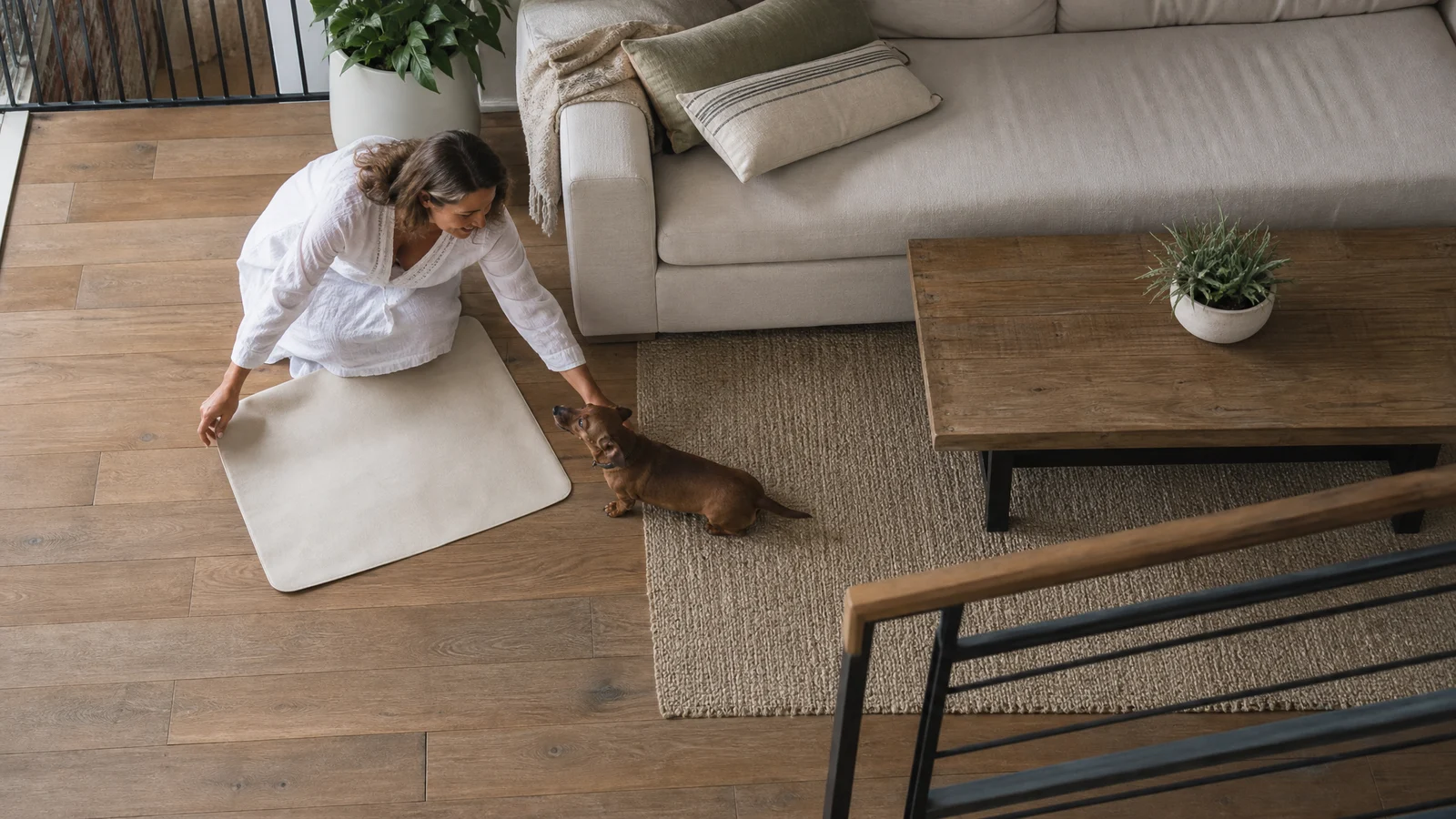
Training a Chiweenie starts before the first formal cue. You arrange the room, notice what the dog values, and decide which everyday choices should become easy to repeat. The goal is not to overcome a tiny dog with a big attitude. It is to build a clear communication system that works in ordinary life.
A Chiweenie may show possible influences from Chihuahua or Dachshund parentage, including alertness, independence, or quick learning, but none is guaranteed. This guide follows practical principles instead of a predicted personality. It covers observation, markers, rewards, household outcomes, calm skills, outdoor attention, and humane troubleshooting. Each principle connects directly to a decision you make at home.
Chiweenie Training Begins With Observation
Observe before choosing the difficulty. Notice whether your dog can eat, orient toward you, explore with a loose body, and recover after a sound or movement. These details tell you whether the current setting supports learning. Parent-breed descriptions can suggest what to watch, but the individual response decides the plan.
List the household moments that need clearer behavior. Doorways, food preparation, harnessing, visitors, rest, and outdoor transitions are more useful starting points than an abstract obedience checklist. Each skill should solve a real problem while giving the dog a recognizable way to succeed.
Use a short preparation check before starting a lesson. These details reveal whether the dog has a fair chance to learn. Check them before the first cue:
- The setting is quiet enough for the dog to notice the cue and accept a suitable reward.
- The desired action is physically comfortable and small enough to complete.
- The marker, reward, and release are ready before the first repetition begins.
- A gate, leash, or added distance is available if the environment becomes harder.
Management protects those early lessons. Close an unnecessary door, move rewards within reach, use a gate to create space, or begin farther from activity. Good management does not replace training. It prevents repeated practice of the unwanted path while the useful path is still new.
| What you see | Training question | First adjustment |
|---|---|---|
| The dog does not orient | Is the setting too busy? | Create distance or reduce movement |
| The dog watches food only | Is the prompt hiding the cue? | Move the reward out of sight |
| The dog leaves after one response | Is the outcome worthwhile? | Change the reward or shorten practice |
| The dog cannot settle afterward | Was the challenge too intense? | Add an easier recovery period |
Choose the First Useful Skill
We use this information to select the smallest useful lesson. A hand target may support movement through the home, while a mat settle may support meals and guests. One well-chosen foundation can serve several routines without demanding a long list of disconnected cues.
Training Uses One Shared Language
Training language gives the dog two dependable pieces of information: the instant an action succeeds and the moment the exercise ends. Choose a short marker word, a release word, and one cue for each behavior. Household members should agree on those meanings so the Chiweenie encounters one recognizable system.
Markers Capture the Useful Choice
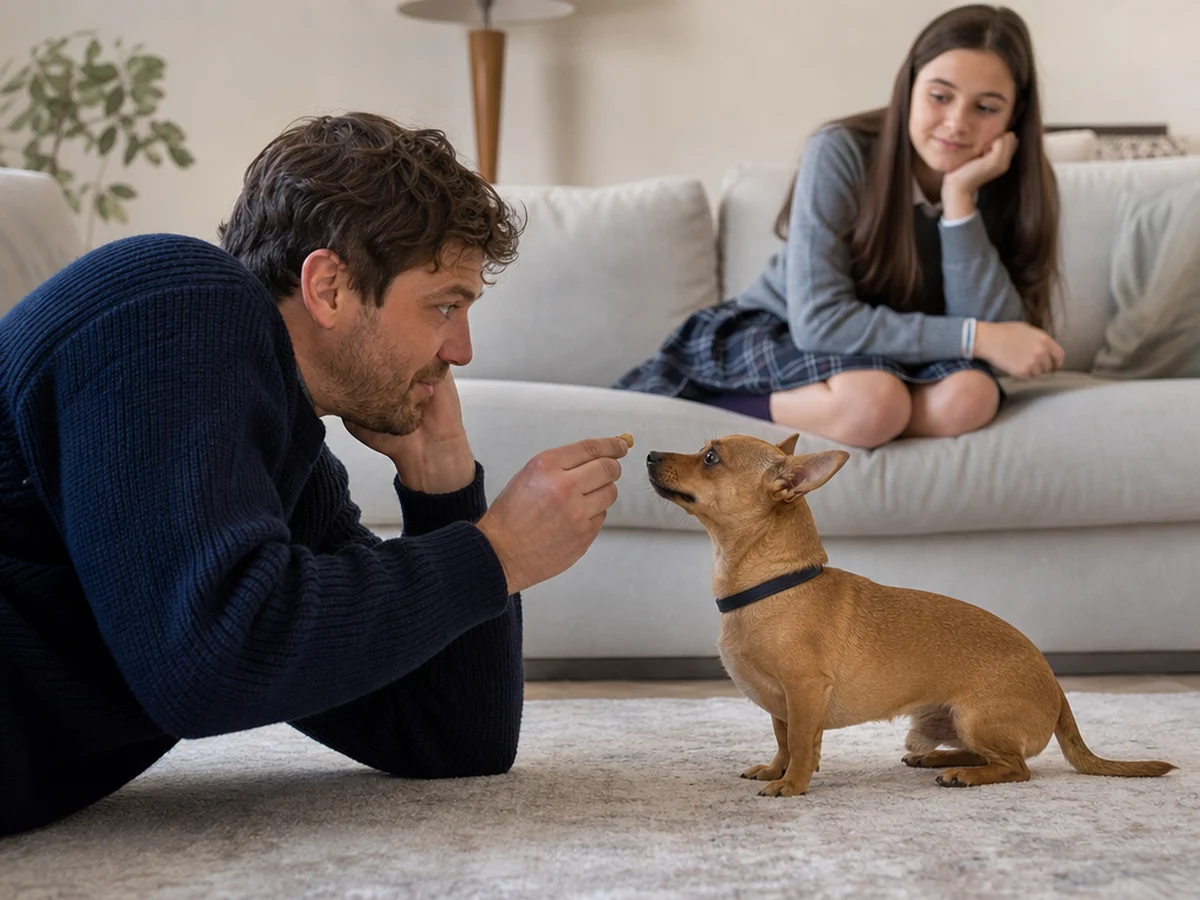
A marker bridges the instant of success and the arrival of a reward. Say it when the dog completes the action, then deliver the reward. The reward-based explanation notes that valued outcomes make behavior more likely, which is the engine behind this communication.
Practice the marker with easy behaviors before using it in a hard setting. Mark a glance toward you, a nose touch to your palm, or all four paws on a mat. Precise timing helps the dog identify the choice instead of guessing which part of a longer sequence mattered.
Rewards Follow the Response
Keep the reward hidden until the dog acts when possible. Food shown first can become part of the picture, leaving the spoken cue weak. After the behavior is understood, cue with empty hands, mark success, and reach for the reward afterward.
Use outcomes beyond food when the dog values them. Permission to sniff, move through a doorway, greet a familiar person calmly, or return to a resting place can reinforce useful behavior. The dog should still understand which choice opened access.
Release Cues End Training Cleanly
A release prevents uncertainty about duration. Reward the dog on the mat, say the release, and invite movement. Without a clear ending, a dog may leave because they guessed the task was over, which makes it harder to build longer calm behavior later.
Keep early repetitions brief enough that you can release before restlessness. Duration should grow after the position is comfortable, not while the dog is still learning where to be. A clear finish also preserves motivation for the next attempt.
Household Training Has Real Outcomes
House rules work best when they describe what the dog should do. “Wait on the mat while food is prepared” is teachable, while “do not be pushy” is only a complaint. Choose a replacement action, arrange an easy first version, and make its consequence useful.
Practice one routine when the household is not rushed. Rehearsing a doorway before a visitor arrives or a mat settle before cooking begins lets the dog learn without the full pressure of the real event. Later, add the functional context in manageable pieces.
Apply the same order across routines: cue, response, marker, reward, and release. Consistency does not mean repeating a cue until the dog gives in. It means preserving the information so the dog can recognize the path that works.
Doorways Become Training Stations
Begin away from the open door. Reward a pause on a mat or beside you, touch the handle, and release the dog away from the doorway. When that is calm, open the door slightly and reward remaining in place before closing it again.
Access through the doorway can eventually reward the pause, but only when the outside area is safe and the dog is secured as needed. If movement outside captures attention, close the door and lower the difficulty rather than testing the response against a full view.
Food Preparation Rewards Settling
Place a mat far enough from the work area that the dog can succeed. Reward several easy returns, then add brief periods while you move. Release after preparation is complete so the routine has a predictable beginning and ending.
A Chiweenie who vocalizes or leaves repeatedly may be too close, waiting too long, or receiving rewards too slowly. Change one feature and try again. A possible vocal tendency from either parent does not make the behavior inevitable or immune to training.
Rest and Separation Stay Distinct
Teach settling while people remain present before combining it with absence. Our Chiweenie crate training guide separates voluntary crate rest, door comfort, and alone time. That structure prevents one difficult skill from obscuring another.
A dog can prefer company and still learn flexible rest through gradual practice. Reward calm at a small distance, move around the room, and return before concern escalates. Let the dog's ability to recover determine when to add another step.
Chiweenie Training Builds Calm Skills
Calm is not the absence of movement imposed by a person. It is the dog's ability to notice something, remain able to think, and return to a comfortable activity. Train this as a sequence of small choices rather than waiting for excitement and asking for an instant stop.
The humane methods standard supports reward-based training for behavior work as well as everyday skills. That standard fits a designer cross whose individual sensitivities cannot be predicted. The plan should create clarity without adding fear or conflict.
Settling Starts Before Excitement
Teach the mat in a quiet room. Mark looking at it, stepping onto it, and lowering into a comfortable posture. Deliver rewards low and close to the mat so the outcome supports remaining there instead of bouncing back toward your hand.
Add household motion gradually. Stand, sit, take a step, or pick up an object while returning to reward calm. If the dog rises, reset without drama and make the movement smaller. The goal is a successful response to ordinary life, not a perfect test.
Handling Uses Consent and Predictability
Pair brief touch with a reward, then pause and observe whether the dog remains available. Start with an easy body area and a movement the dog already accepts. Grooming, harnessing, and veterinary preparation become separate lessons rather than one long restraint event.
Regular vet visits help establish normal movement, comfort, and behavior. Contact your veterinarian about a sudden change in tolerance for touch, gait, appetite, sleep, or attention. More training is not the answer when physical discomfort may be changing the response.
Outdoor Training Protects Attention
Outdoor learning begins below the level where the dog is absorbed by the environment. A possible Dachshund influence may make scent compelling, while possible Chihuahua alertness may make movement noticeable. Those are questions for observation, not reasons to expect pulling or barking from every Chiweenie.
Reward check-ins before asking for formal walking position. When the dog glances back, mark and reward, then allow safe sniffing where appropriate. This makes communication part of the walk rather than a constant interruption of everything the dog values.
Change direction with enough room for the dog to follow comfortably. Our Chiweenie leash training guide works through pulling, freezing, and lunging as different situations. Use it when the outdoor problem needs a more specific setup.
Scent as a Training Outlet
Scent work can also give the nose a clear job. The nose work introduction begins with easy searches that allow the dog to find food. Keep household games simple and safe, then let success guide whether your individual Chiweenie enjoys the activity.
Recall should begin on a suitable leash in a quiet place. Say the cue once, move in a way that invites pursuit, and reward arrival generously. Never use the recall cue to predict only the end of enjoyable activity, or returning may lose value.
Training Problems Change the Plan
When training stalls, identify the weak layer instead of intensifying the demand. Confusion needs a clearer prompt, weak motivation needs a better outcome, distraction needs distance, and fear needs a safer setup. Sudden change needs veterinary attention rather than a harder lesson.
Return to the last version that looked easy and alter one variable. If the dog succeeds, the change identified the problem. If they remain unable to engage, end the session and reassess the environment, physical comfort, and whether professional help is appropriate.
A qualified reward-based trainer can help with skills that remain inconsistent across carefully managed settings. Ongoing fear, increasingly intense responses, or a setup that cannot maintain safe space calls for a qualified behavior professional. The goal is an individualized plan, not a prediction based on the parent breeds.
Complete training is not a finished list of cues. It is a household system that keeps producing clear choices, useful outcomes, and room to recover. Observe the Chiweenie in front of you, teach one recognizable answer, and raise difficulty only when the current version feels ordinary.
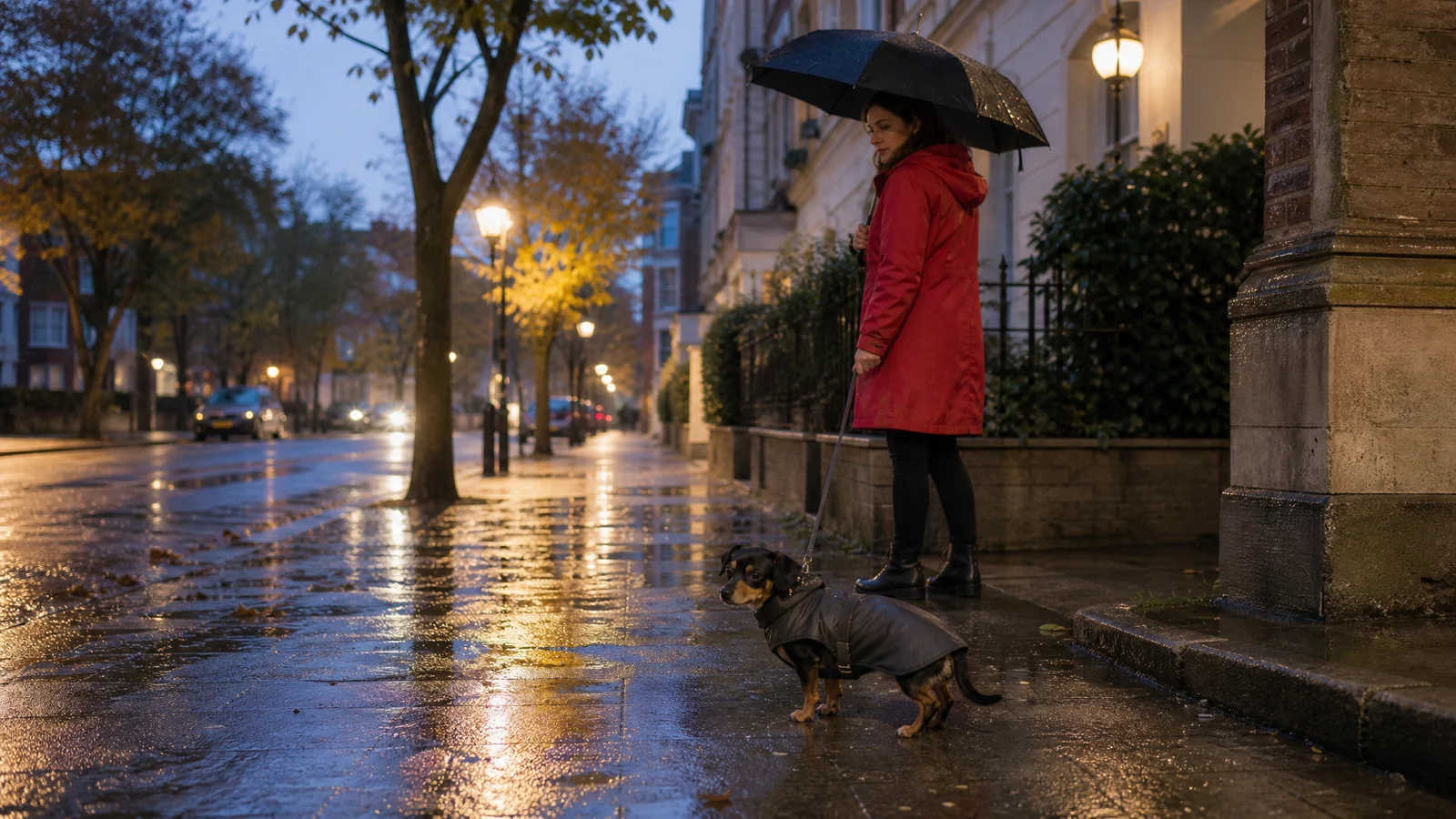 Training basicsChiweenie Leash Training for Pulling, Freezing, and Lunging
 BehaviorChiweenie and Kids: Teaching Gentle Handling for a Tiny Dog
 BehaviorWhat's a Chiweenie Doing Under the Blankets?