 Chiweenie
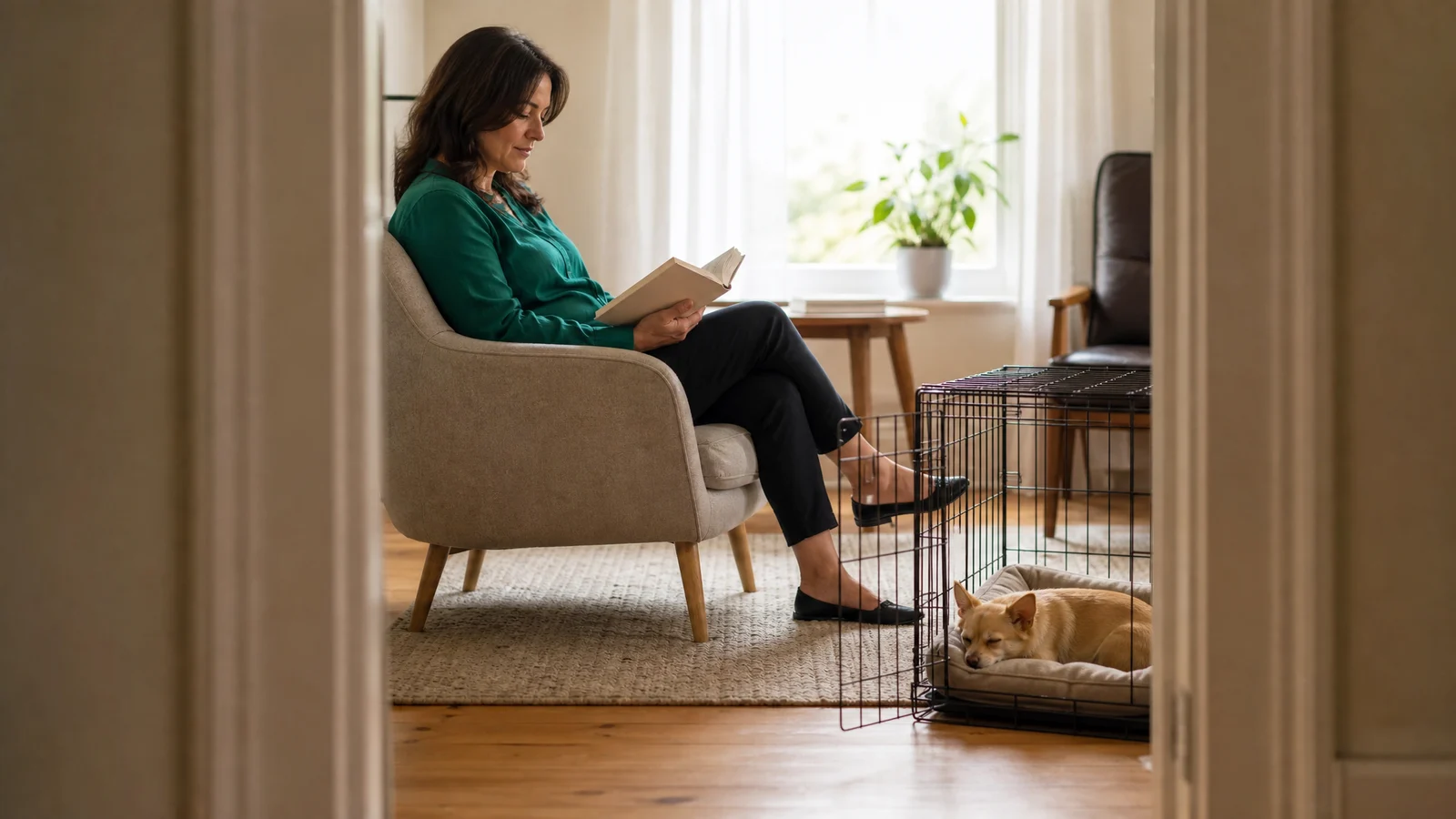
A crate can become a comfortable resting place, but closing the door does not teach a Chiweenie to feel safe alone. Those are separate skills. The dog first learns that entering and resting are worthwhile, then learns that a door can move, a person can step away, and ordinary household life continues.
A Chiweenie may show possible affection, alertness, or vocal tendencies associated with either parent breed, but the cross does not guarantee any of them. This guide starts with the physical setup, then builds voluntary entry, door movement, distance, and brief absence. It also explains when crying means the plan needs to become easier. The final goal is flexible rest, not silent endurance.
A Chiweenie Resting-Space Toolkit
The most important tool is a crate that functions as a resting space rather than a test of endurance. The crate training goal is a safe, comfortable place where a dog can relax, sleep, or choose downtime. Every other tool should support that purpose.
Prepare the space before asking the dog to enter. Use stable footing, comfortable bedding your dog can safely use, a water plan suitable for the situation, and a location away from harsh temperature changes. Remove anything that could catch while the dog is unattended.
Rewards belong near the crate, but they should not create pressure. Keep food within your reach so you can mark a glance, approach, or paw inside without reaching over the dog. A favorite safe chew may support settling after entry, provided it is appropriate for that individual.
- Choose a crate large enough for comfortable standing, turning, stretching, and lying down.
- Place it where household life is present without constant foot traffic or startling noise.
- Keep a marker and suitable rewards ready before each short practice period.
- Prepare a separate safe room or gated area so the crate is never the only management option.
Practice calm in the backup space before it is urgently needed. Reward the dog for resting there while you remain nearby, then move around normally and return. Familiarity makes this area a genuine option rather than a sudden substitute when crate practice becomes difficult.
The backup space matters because confinement and absence can challenge a dog in different ways. If a Chiweenie rests comfortably in a room but struggles when enclosed, the crate itself needs work. If they struggle in every safe space when a person leaves, alone-time training is the larger issue.
Inside the Chiweenie Crate Training Station
Put the crate where your dog can rest without feeling isolated from normal life. A busy doorway may interrupt sleep, while a distant room may add separation before crate comfort exists. Watch where your Chiweenie naturally settles and choose a nearby location with enough quiet.
Fit the Crate to the Individual
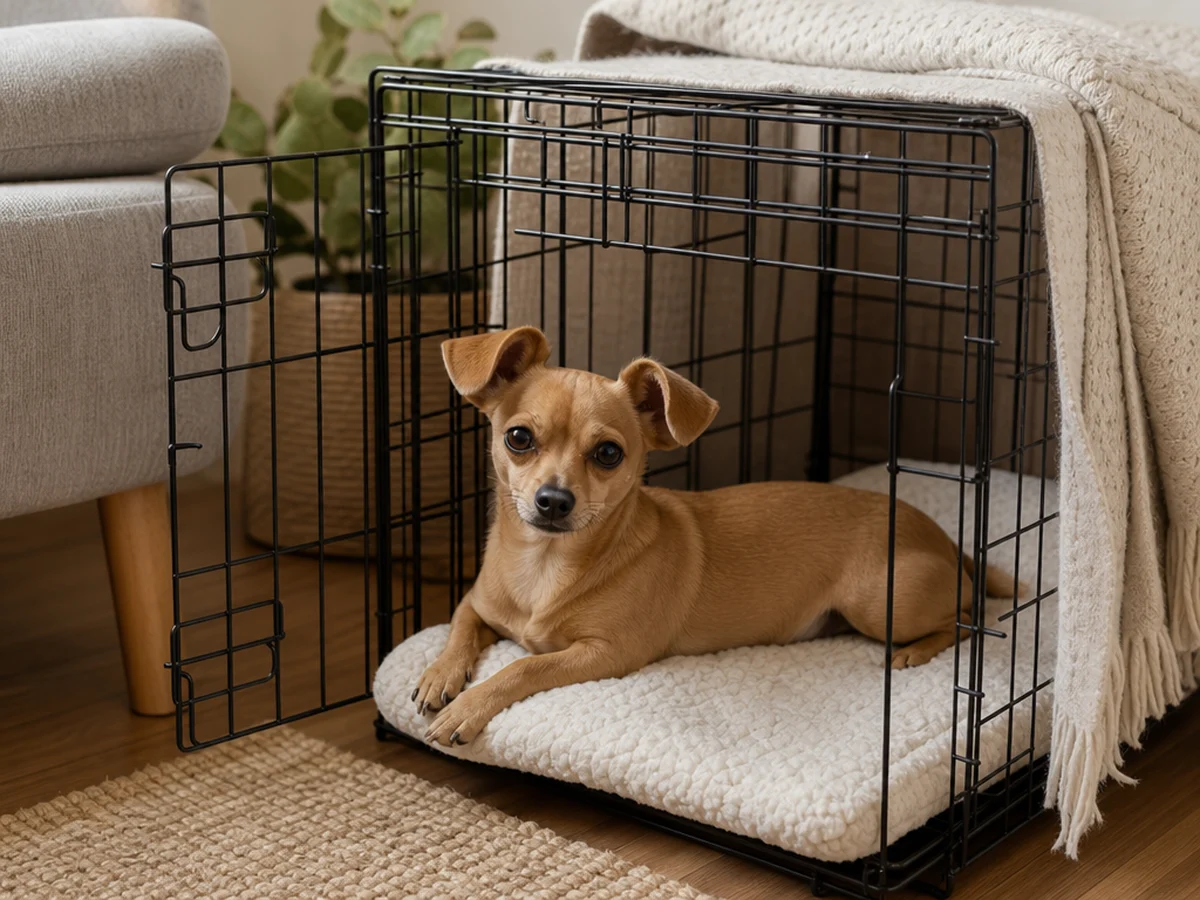
Chiweenies vary in body shape because parentage does not determine one standard build. Some are longer and lower, while others are more compact. Choose enough floor length for an easy turn and full rest, and make sure the entrance does not require an awkward jump or squeeze.
Check the setup from the dog's height. A sliding mat, rattling tray, moving cover, or vent blowing directly inside can make entry less appealing. Correct the physical problem before adding rewards, since training cannot make discomfort a good resting choice.
Make the Room Predictable
Ordinary sounds should arrive gradually. Begin while the home is calm, then practice with familiar movement at a distance. If a passing person or closing cabinet makes the dog pop up, lower the activity and reward the return to a relaxed posture.
We prefer a location that lets the dog observe without monitoring every doorway. A partial visual barrier may help some individuals, while others relax better with an open view. Let loose muscles, easy breathing, and voluntary return show which arrangement suits your dog.
Crate Training Through Offered Choices
Fasten the door so it cannot swing while the dog investigates. The first lesson is that the dog controls approach and retreat. Mark looking toward the crate, then an approach, then contact with the entrance. Place rewards where the dog can collect them without being pushed farther than they chose.
The voluntary entry method rewards an initial look, then an approach, and only later a complete entry before naming the action. That order keeps the cue meaningful. It names a behavior the dog already understands instead of becoming pressure to enter an uncertain place.
Shape Entry in Small Pieces
Reward progress at the dog's current edge. If front paws enter easily but hind paws remain outside, deliver several rewards inside and then allow the dog to leave. The ability to exit makes the next voluntary return more informative than blocking the doorway.
Move a meal or safe enrichment item into the crate only after the dog is comfortable approaching. Stay nearby at first. When the dog finishes and remains relaxed, let them choose whether to rest or leave rather than using the food to trap them behind a moving door.
Add Door Movement Separately
Touch the door, mark calm, and release a reward. Move it a small amount on the next repetition. Close it briefly only when those motions no longer interrupt the dog's posture, then open it before the dog needs to ask.
Watch where the dog rests inside the crate as well. A dog pressed against the exit may be waiting rather than relaxing, while a dog who shifts onto a hip or changes comfortable positions is showing more flexibility. Use the whole posture to set the next step.
Door duration should grow in uneven, easy increments. Mix a slightly longer calm moment with several shorter ones so every repetition does not become harder. Stay beside the crate until the closed door itself has stopped being important.
The small-step approach recommends defining the finished behavior and rewarding its pieces in sequence. For crate training, the finished behavior is relaxed rest, not merely remaining inside. Posture and recovery therefore matter more than elapsed time.
Distance Is a Different Crate Lesson
Once a Chiweenie can rest with the door briefly closed while you remain nearby, train your movement as a new skill. Standing up, taking a step, turning away, touching a doorknob, and leaving sight are different events. Add them separately so you know which one changes the dog's comfort.
Use a graduated ladder, but move according to the dog's response rather than a rigid schedule. Each rung should look almost ordinary before you advance.
- Sit beside the crate while the dog settles, then reward calm without constant attention.
- Stand and sit again, marking the dog for remaining loose and comfortable.
- Take a step away, return, and release a reward before concern appears.
- Move around the room normally while returning often enough to keep the exercise easy.
- Disappear behind the doorway for an easy moment and return before the resting posture changes.
Practice similar separation in the safe room, not only in the crate. The dog might rest behind a gate while you prepare something nearby, then remain comfortable as you move farther away. This prevents the crate from becoming the sole signal that a person will disappear.
Return behavior matters as much as departure. Reenter calmly, wait for a settled moment, and open the door without creating a burst of excitement. A routine return keeps the exercise from becoming a cycle of tense waiting followed by a dramatic release.
Departure cues also deserve separate practice. Pick up keys, put them down, and stay home. Open and close an outside door without leaving for a meaningful absence. When these details stop predicting a difficult event, they become less likely to trigger concern before the lesson begins.
Our guide to how to train a Chiweenie places alone-time work beside settling, handling, and household communication. Use those calm skills throughout the day so independence is not practiced only when you need to leave.
Crate Crying and Distress
Crying is information, but its meaning depends on the whole picture. A brief sound followed by renewed settling differs from vocalizing that grows, repeats, or comes with frantic movement. Watch posture, breathing, ability to take food, and recovery after you return.
Make Mild Uncertainty Easier
If the dog can still eat, orient, and settle, reduce one part of the exercise. Sit closer, shorten the door closure, or return before stepping out of sight. Reward quiet engagement without waiting through an escalating performance.
A quiet cue can be useful only after the dog is capable of calm in that situation. The barking guidance describes pairing a calm cue with small rewards during silence. It should not replace addressing fear, discomfort, or an unmet need.
Recognize a Plan That Is Too Hard
Repeated escape attempts, heavy panting without heat, refusal of familiar food, or an inability to recover after your return suggest more than a minor complaint. Stop increasing absence. Use the safe-room alternative and seek an individualized plan from a qualified professional who relies on rewards.
Regular vet visits matter because abrupt differences in sleep, potty habits, gait, or comfort inside an enclosure may reflect a health concern. Ask your veterinarian about abrupt behavior changes rather than assuming the dog has decided to resist the crate.
Crates also cannot replace appropriate potty opportunities, movement, social contact, or rest outside confinement. Our Chiweenie potty training guide helps coordinate outdoor opportunities with supervision, which can reduce pressure on both house training and crate practice.
Flexible Chiweenie Crate Training
The finished picture is flexible. Your Chiweenie can enter willingly, rest with the door open, tolerate suitable brief closures, and also relax in another safe area. The crate is one useful place, not the only place where calm can happen.
Continue occasional easy practice after the skill looks stable. Offer a reward for voluntary entry, close the door for an uncomplicated household moment, then release before restlessness. Easy repetitions maintain the meaning of the space better than using it only for long absences or unusual events.
Judge progress by the dog's body and choices. Voluntary return, a loose resting posture, and smooth recovery when you move are better signs than silence alone. A quiet dog can still be worried, so observation remains part of every stage.
Crate comfort and alone-time comfort may progress at different rates. Keep teaching them as separate, connected skills, and let the slower one set the pace. That approach gives an individual Chiweenie room to vary without turning parent-breed possibilities into a promise about how they should cope.
 Exercise and jobsProtecting a Chiweenie's Long Back: Low-Impact Exercise
 Training basicsHow to Potty Train a Chiweenie Puppy Without Guesswork
 Training basicsHow to Train a Chiweenie With Reward-Based House Rules