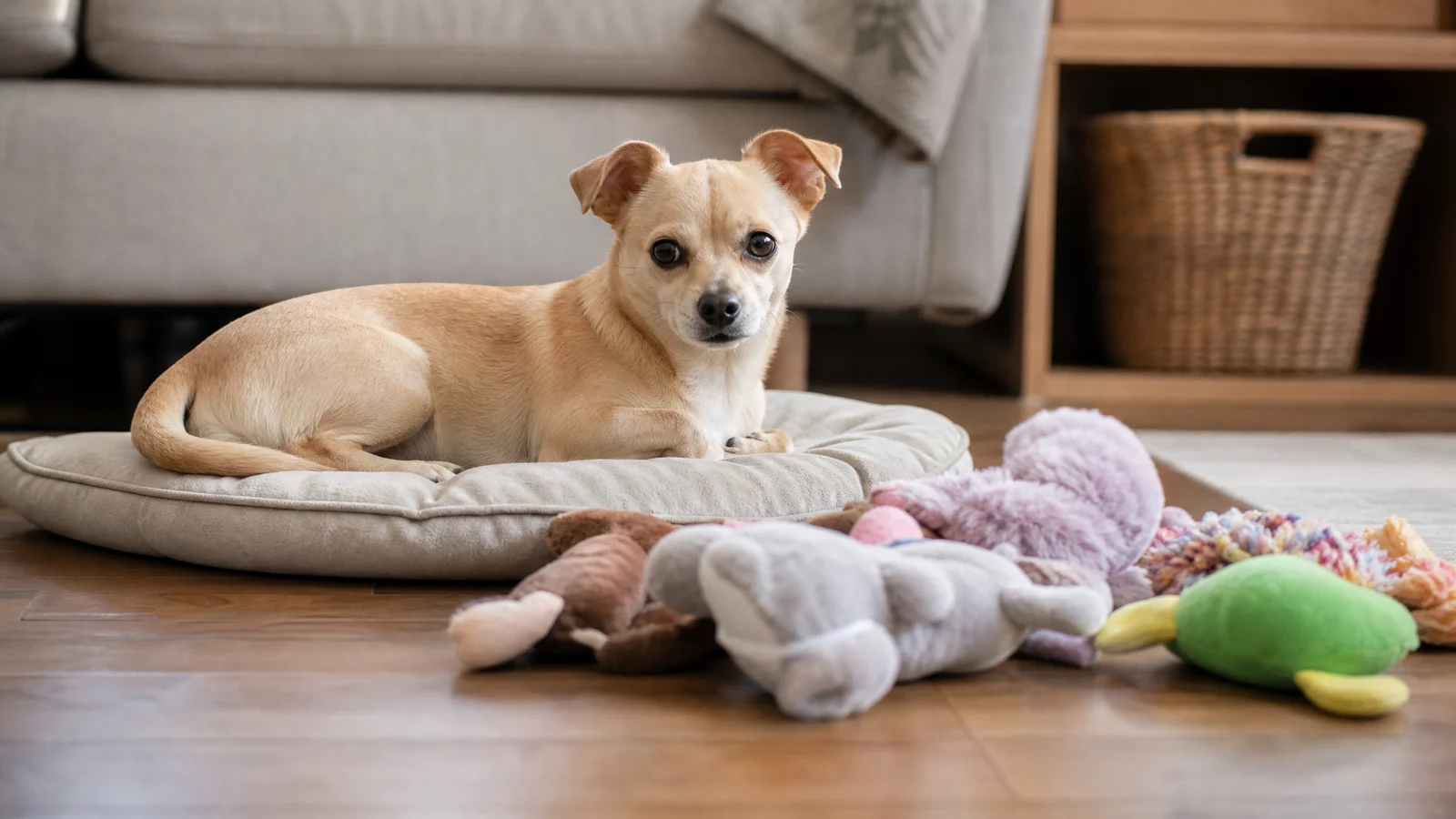
 Chiweenie
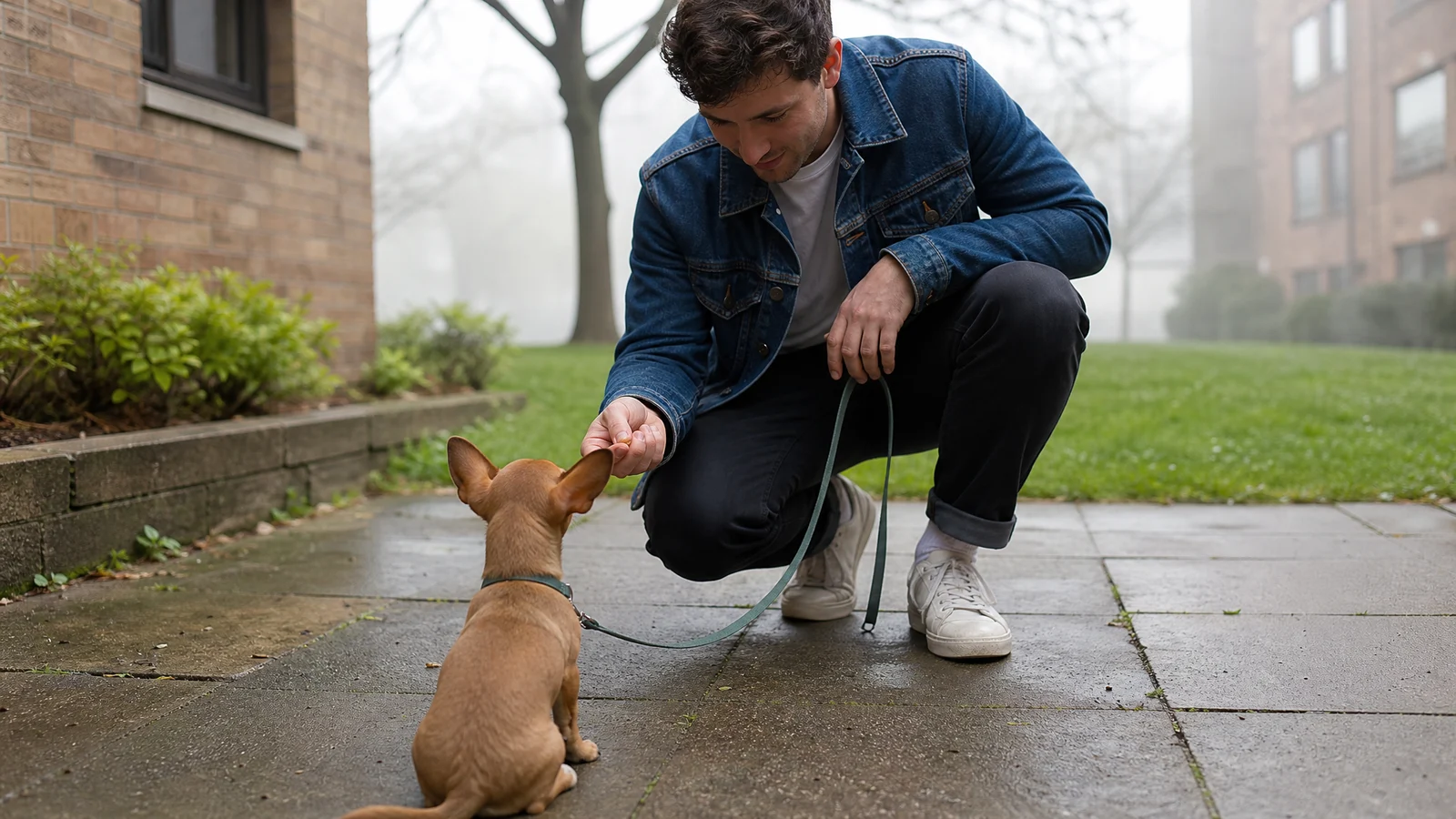
Potty training a Chiweenie puppy becomes clearer when the household controls the route, opportunity, and reward. The puppy cannot yet explain whether they missed the door, became distracted outside, or had too much unsupervised space. Your setup supplies those missing pieces while the outdoor habit takes shape.
Parent-breed descriptions may raise questions about sensitivity, independence, or eagerness, but they cannot predict how one Chiweenie will learn. This guide follows the actual trip from indoor transition to outdoor success, then returns inside for supervision and accident review. It uses rewards throughout and treats every miss as scheduling information. The route stays simple enough for every caregiver to repeat without improvising under pressure.
Chiweenie Potty Training Starts at the Door
Choose one exit and one practical potty area before the next trip. A consistent route removes unnecessary choices for a puppy who is still learning what the outing means. Keep the leash, rewards, and weather gear ready so preparation does not consume the opportunity.
Carry or calmly guide the puppy when delay is likely to produce a miss. Chiweenies vary greatly in size and body shape, so choose handling that supports the individual comfortably. The route should be physically easy and free from steps or surfaces your veterinarian has advised them to avoid.
Use the same brief cue only after reaching the destination. Repeating it through the home can turn it into background noise. At the potty area, stand quietly enough for the puppy to investigate without converting the trip into play before elimination happens.
- Prepare a regular leash and rewards beside the chosen exit.
- Use one outdoor destination that the household can reach without delay.
- Keep the route calm and direct until the puppy has finished.
- Save wider exploration for after the marked and rewarded success.
This route is a teaching aid, not a permanent restriction. As the puppy understands the pattern, different doors and places can be introduced gradually. Beginning with one clear path simply makes the first version easier to recognize.
Potty Training Through Everyday Handoffs
A puppy's day contains moments when an outdoor opportunity is especially sensible. Waking, eating, drinking, active play, a change of room, and release from a rest area all mark transitions. Watch your individual puppy rather than relying on a universal clock that may not fit.
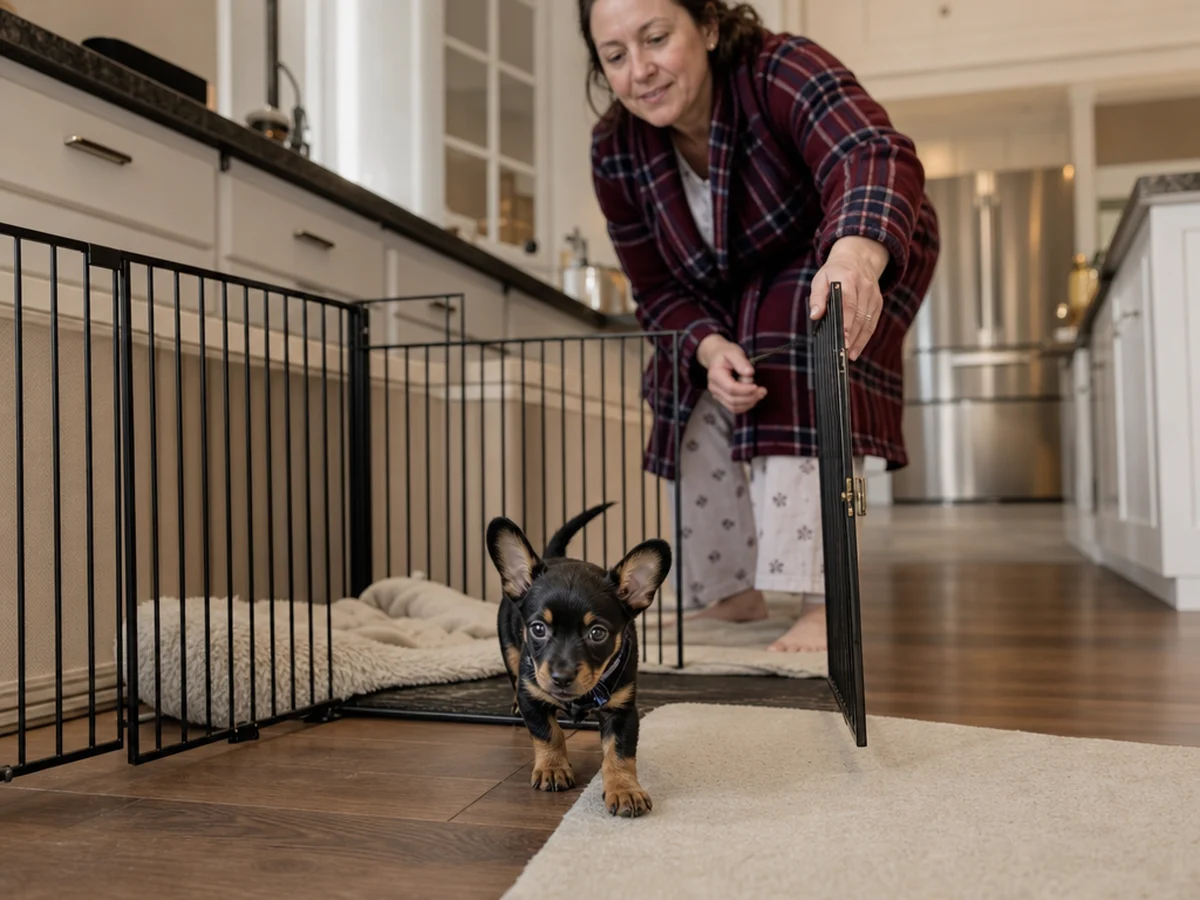
Move outside at the beginning of the transition, not after wandering and sniffing have already started indoors. If the puppy wakes, guide them directly to the exit. If play stops abruptly and attention shifts to the floor, treat that change as useful information and begin the route.
Structure does not conflict with reward-based teaching. The humane training statement explains that dogs still need routine and guidelines. In house training, structure means arranging timely opportunities and reinforcing the correct destination.
Build a Household Handoff
Everyone caring for the puppy should know who is watching, which exit to use, and where rewards are stored. A vague handoff creates the gap in which accidents happen. Say clearly when responsibility changes, especially after meals, play, or a return home.
Use a simple written log only if the household needs help seeing patterns. Record the transition and whether the trip succeeded, without turning normal variation into a rigid prediction. The purpose is to notice missed opportunities and improve coordination.
Adjust Opportunities to Observation
If accidents cluster after one type of event, place an outdoor trip immediately after that event. If the puppy often reaches the yard and does nothing, reduce distraction and wait quietly before returning indoors under close supervision. Try again at the next clear signal or transition.
A small puppy may give subtle signals that are easy to miss from across a room. Stay near enough to notice sudden sniffing, circling, wandering away, or a pause in play. Learn this puppy's sequence instead of assuming every Chiweenie signals in the same way.
Outdoor Potty Rewards
The reward needs to explain exactly what worked. Stay close enough to notice completion, mark it promptly, and deliver a reward while you are still at the destination. Waiting until you return to the kitchen may reward coming inside rather than eliminating outdoors.
The reward principle connects a valued outcome with the action you want repeated. For potty training, timing carries the message. The puppy should be able to connect the outdoor act with the marker and outcome.
After rewarding, allow a little safe sniffing or calm exploration when circumstances permit. If every success immediately ends outdoor access, a puppy may learn that finishing makes the interesting place disappear. Continued access can become part of the reward without replacing food during early learning.
Choose a reward that matters to this puppy and is easy to deliver. Parentage does not determine food motivation. If the puppy accepts a reward but immediately disengages, test another suitable option in a calm setting before deciding they are difficult to train.
Keep the reward sequence calm enough that celebration does not interrupt completion. Mark after the puppy has finished, then deliver the reward where they stand. This timing helps the puppy remain at the destination instead of turning toward you too early.
Once the behavior is reliable in the familiar area, vary rewards gradually while continuing to acknowledge success. Do not remove reinforcement during a household change, difficult weather, or a new destination. Those conditions create a new version of the task.
Watching the Puppy Between Potty Trips
Indoor freedom should match current reliability, not the puppy's confidence or small size. A Chiweenie who looks settled can move behind furniture quickly, and a quiet room can hide an unfinished habit. Keep the puppy near an attentive person or in a suitable rest area between trips.
Active supervision means you can see behavior and respond immediately. It does not mean sharing a room while attention is elsewhere. A lightweight leash held safely or a nearby gated space can reduce wandering, provided the arrangement is comfortable and never creates an unattended snag risk.
Use Rest Areas as Management
A rest area should be comfortable, appropriately sized, and associated with relaxation. It buys the household time when direct supervision is not possible, but it does not teach the outdoor destination by itself. The lesson still occurs on the route and at the rewarded potty area.
Our Chiweenie crate training guide shows how to build voluntary comfort before relying on a crate. A puppy who is worried by confinement needs a different safe setup while crate skills develop separately.
Expand Freedom After Success
Give access to a small, easy-to-watch area after a successful trip. If the puppy remains reliable there across ordinary transitions, add another connected space. This gradual expansion prevents the entire home from becoming one difficult training environment.
If a miss occurs in the added space, reduce access and restore closer supervision. That change is not a penalty. It simply returns the puppy to the version in which the household can provide timely opportunities and notice signals.
Accidents Guide Chiweenie Potty Training
An accident does not reveal a bad motive or a fixed stubborn streak. It shows that the puppy had an opportunity indoors before the outdoor habit was reliable. The useful response depends on whether you find the miss later or notice it while it is happening.
A Miss Found Later
Clean the area thoroughly with a pet-safe product designed for the surface, then review the preceding transition. Ask who was supervising, whether the route was offered, and whether the puppy had too much space. The puppy cannot connect a later human reaction with the earlier event.
Change the next setup rather than trying to communicate about the past. Move the outdoor trip earlier, improve the household handoff, or reduce access to that room. One practical adjustment gives you a testable plan for the next similar transition.
A Miss Noticed in Progress
Interrupt only by calmly guiding the puppy outside if that can happen without startling them. Go to the usual destination and reward completion there. If nothing more happens, return indoors with close supervision and offer another opportunity when a clear transition arrives.
The stepwise teaching model fits this process because the finished habit is built from recognizable pieces. Route, destination, elimination, marker, and reward form the sequence. A miss tells you which piece was absent or too difficult.
Frequent accidents despite careful opportunities deserve veterinary attention, particularly when elimination changes suddenly or appears uncomfortable. Regular vet visits help track normal development and health. Ask your veterinarian rather than assuming a training problem when the physical pattern changes.
Each Room Joins Chiweenie Potty Training
Reliable behavior in one room does not automatically transfer throughout the home. Add space as though you are teaching a familiar skill in a new setting. Begin after an outdoor success, supervise closely, and keep the route to the exit simple.
New flooring, closed doors, visitors, travel, and weather can all alter the picture. A puppy may hesitate at rain, become absorbed by a guest, or fail to recognize an unfamiliar exit. Restore the clearest version of the route and strengthen rewards while the new condition becomes familiar.
Connect house training to the broader communication system in our Chiweenie training guide. Name response, following, settling, and comfortable handling all make transitions easier, but none replaces supervision or a timely outdoor opportunity.
Parent-breed possibilities should not control these decisions. A sensitive puppy may need calmer movement through a doorway, while an easily distracted puppy may need a quieter destination. Observe what changes performance and adjust that feature for the individual.
Chiweenie Potty Training Beyond One Routine
Reliability grows when the puppy seeks the route, finishes promptly in the chosen area, and remains clean across a wider part of the home. It also survives normal transitions because the household continues to notice signals and provide reasonable opportunities.
Do not rush to remove the system after a good stretch. Keep rewards available during changes and continue supervising any newly opened room. A setback after travel, weather, illness, or schedule disruption means the context changed, not that the puppy forgot everything.
Prepare the next success now. Put rewards by the exit, confirm who is supervising, and take the puppy out at the next transition. That concrete route makes potty training easier to repeat and easier to troubleshoot.
Your Chiweenie does not need to match a predicted parent-breed personality to learn. They need clear opportunities, immediate information, and a household that adjusts to observed patterns. Build those conditions consistently, and the outdoor habit has room to become the obvious choice.
 Training basicsHow to Train a Chiweenie With Reward-Based House Rules
 Training basicsChiweenie Leash Training for Pulling, Freezing, and Lunging
 BehaviorChiweenie and Kids: Teaching Gentle Handling for a Tiny Dog