 Chiweenie
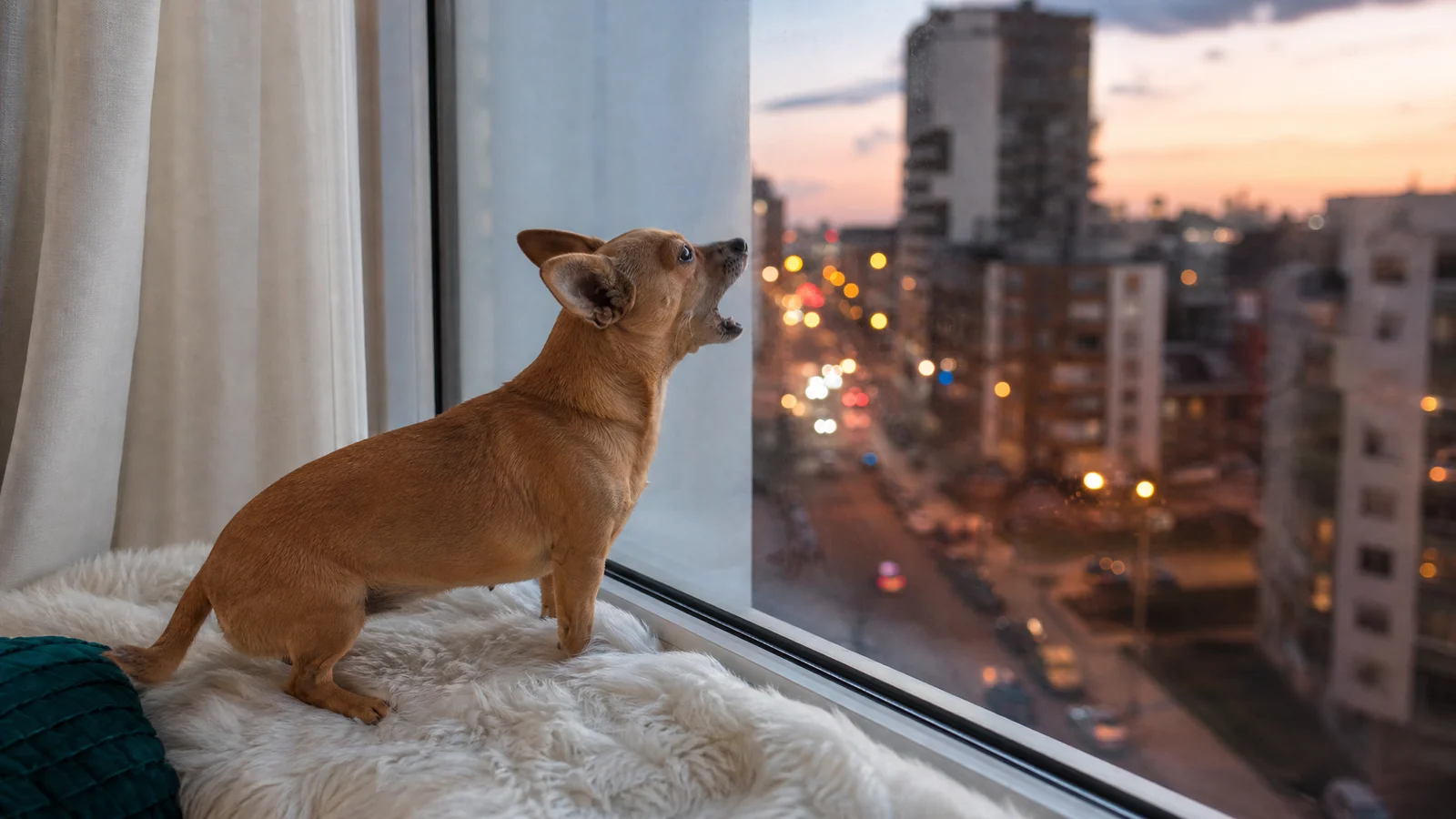
A Chiweenie who barks at every sound can be taught a quiet settle by rewarding calm and giving the alarm a job to finish: a few barks, then a trip to a mat. The loud voice is largely inherited. Both parent breeds rate 5 of 5 for barking and 4 of 5 for watchdog nature, and the Dachshund's loud, houndy bark was bred to mark a dog's location underground.
This matters because an alarm habit grows stronger every time a doorbell or hallway noise sets it off, and thin apartment walls carry all of it to your neighbors. Handled well, you get a small dog who reports what they noticed and then lets it go. Our focus is this breed's behavior, and the plan below reflects it. Read on for the beliefs that keep owners stuck, how to interrupt barking calmly, how to teach a settle, and a step-by-step practice schedule.
The Spoiled Chiweenie Barking Myth
If small-dog barking came from spoiling, every pampered Chiweenie would bark and every strictly raised one would stay silent. Owners report something else. Some Chiweenies stay remarkably quiet for years, while others are noisy. The belief blames the owner, but much of the cause sits in the dog's ancestry.
Look at what the parents were built to do. The Chihuahua is described as a very alert little dog with terrier-like self-importance, confidence and self-reliance. The Dachshund is described as smart, vigilant and brave to the point of rashness. A cross may inherit any mix of these traits, and a Chiweenie who sounds off at the mail carrier is doing what their lineage rewarded for generations.
Owners do shape what happens after the first bark. The dog barks, you hurry over, you talk, and the visitor walks away. From the dog's side, barking produced a result, and a result repeated often enough turns a reflex into a habit that outlasts the alarm. So the verdict is instinct plus learned reward. That is good news, because the learned part is the part you can change.
A Tiny Chiweenie Body With a Hound's Voice
Many owners expect a lap-sized dog to have a lap-sized voice, but volume comes from breeding more than from weight. The Dachshund's bark is described as surprisingly loud and houndy, a throwback to working roots that let a human hunting partner locate the dog underground. A sound built to carry through soil carries very well through an apartment wall.
The Chihuahua side adds a dog who notices small changes. Put the two together and a Chiweenie may arrive with a big-dog voice and a sharp eye for anything new. Dogs vary, and a cross can take after either parent or neither, which is why a few are nearly silent.
Not all of the noise is an alarm. Owners describe a wide spread of triggers and styles:
- Some owners describe dogs who bark at people passing by, at new people, at small children, or at other dogs, which fits the vigilant watchdog nature of both parent breeds.
- Some dogs bark at animals on television, and some only when music plays rather than during the show, so the trigger is the sound and not the story.
- Sirens and fire trucks can bring out a howl instead of a bark, which is a separate behavior and worth its own calm practice.
- Some Chiweenies hold long back-and-forth conversations with their people, and neighbors may complain even though nothing is wrong.
- A few bark at particular strangers or small children, sometimes after a bad earlier experience.
Watch the body behind the sound. A loose, wiggly dog aimed at you is probably chatting, while a stiff stance aimed at a door or window is alerting. Both respond to the same toolkit: reward quiet and teach an "enough" cue.
Does Shouting Quiet a Barking Dog?
It feels logical. The dog is loud, so you get louder. But dogs read tone and energy far more than words, and a raised voice aimed at a barking dog can sound like someone joining the alarm. Matching the noise raises excitement, and an excited Chiweenie barks longer.
The Dachshund parent is also described as sensitive, so a tense, noisy household tends to add pressure rather than calm. Waiting the barking out is no better for alarm barking, since the visitor leaves while the dog is still going and the dog credits the bark.
Interrupt Low and Calm
What works is a quiet, boring interruption. Walk toward your dog, say the same short phrase every time, such as "thank you," in an even voice, and guide them toward their mat. The phrase tells your dog you heard the report. It should be so predictable that it becomes a signal and not a scolding. If your dog is too wound up to respond, step between them and the window, or end the moment by moving to another room.
Pay for the Pause
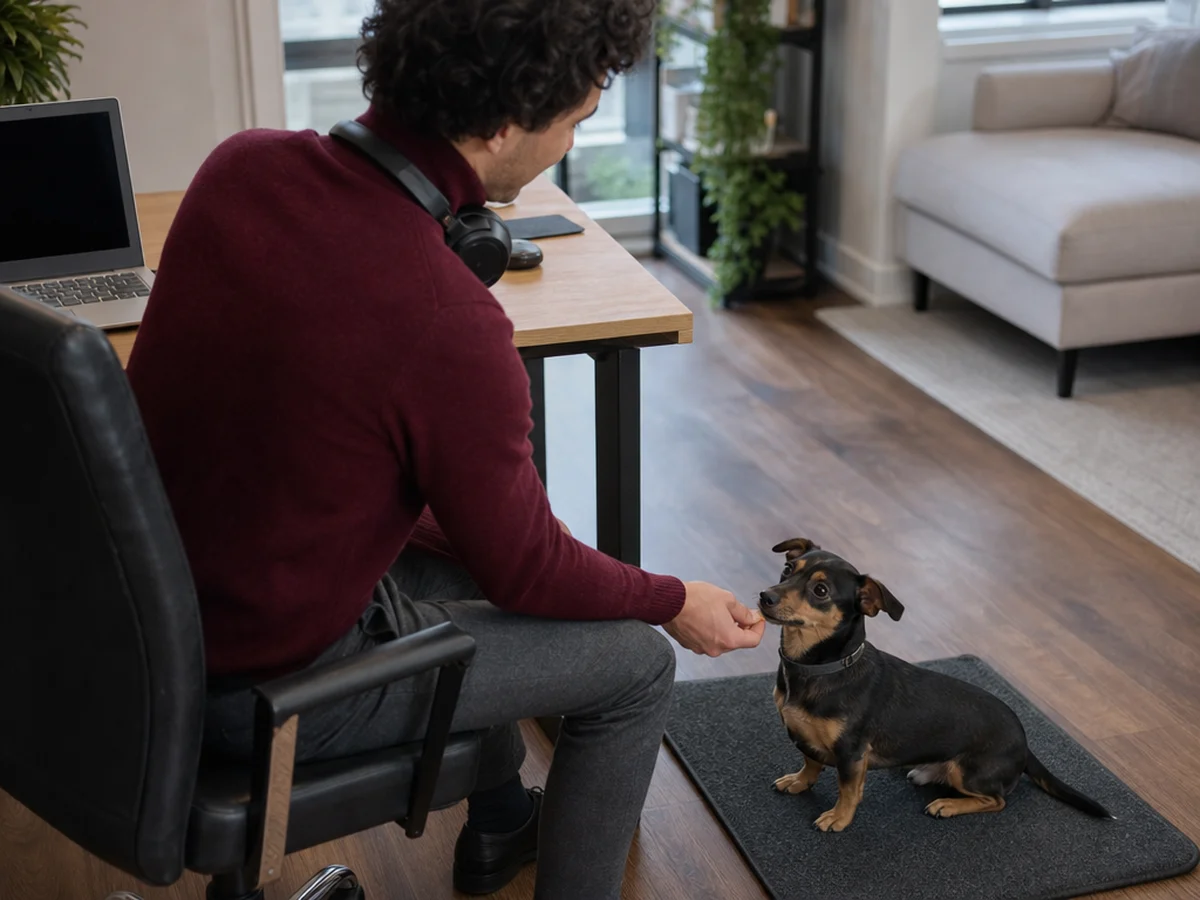
Interrupting only helps if something good follows. The usual method for teaching a quiet cue is to say the word calmly while the dog is barking and feed a steady trickle of tiny treats until they go silent. The dog connects the word with the silence over several days of practice. Keep the treat hidden until the quiet arrives. If the food appears first, your dog can learn that barking makes treats show up.
Over time "thank you" becomes "enough": you heard them, and the job is finished. The pause after the first burst is the moment to catch, and it is brief, which is why a marker helps in the stages below.
Alert Barking Is Hardwired, Not Defiance
Some owners ask for the alerting to be trained out entirely, and that is where frustration starts. With watchdog nature rated 4 of 5 in both parents, noticing a sound and reporting it is built in. Asking a Chiweenie never to react to a knock asks them to stop being the dog they are. The attempt usually fails or leaves them tense, and a dog who looks defiant is often just doing the job they were made for.
The Alarm Versus the Aftermath
What you can change is the length of the report. The alarm is the first few barks, an instinctive response to a sudden sound. The barking that follows is a separate behavior, driven by arousal (a keyed-up state) and by whatever payoff came last time. The first part is wired, and the second is learned, so it responds to training.
Treat the alarm as a job with an end. Your dog reports, you say thank you, and the job is finished. Because Dachshunds are also described as independent, many Chiweenies see no reason to check with you first, so your rewards have to be worth more than the door.
Manage the View Between Lessons
Management does the rest between lessons. Frost or cover the lower part of a window, close curtains, lower the television volume, or move your dog's mat to a spot with a calmer view. Fewer rehearsals mean the habit fades faster. Anxious barking at new people, especially with attempts to bite, is a different problem, and Chiweenie snapping and biting is the better starting point there.
Can a Chiweenie Settle Without Total Silence?
Many owners assume success means silence and that a dog who barks at all has failed. A settle is a cue meaning go to your spot and relax, and for this breed we define it as a few alert barks followed by a return to a mat. A Chiweenie who reports the doorbell and trots to the mat has succeeded. If yours is one of the quiet ones, still reward calm moments, because that makes it more likely the quiet lasts.
The skill has several parts, so break it into small steps that are rewarded in sequence. Reward-based trainers describe a clicker or verbal marker as the tool that pins down the moment your dog earned the reward, with a treat or toy paying for it.
Stage One, the Mat in a Quiet Room
Start away from windows, with no triggers at all. Mark any glance or paw touch on the mat, then ask for slightly more:
- Put the mat down and mark and treat any look at it or touch of a paw.
- Wait for all four paws on the mat, then mark and treat.
- Wait for a sit, then for a lie down, offering the treat low so your dog stays put to eat.
- If your dog offers the down on their own, mark that instead of luring.
- End on an easy win, with sessions of just a few minutes.
Stage Two, Stretching the Time
Once the down is reliable, pause a moment longer before marking. Mix easy rounds with slightly harder ones so progress is not a predictable staircase. Add a step away and back, then reward while your dog stays on the mat. Raise time or distance, never both at once. When your dog heads to the mat without a lure, add the word "settle" just as they go.
Stage Three, Adding the Alarm
Now add a controlled trigger, such as a recorded knock at low volume. Allow a few barks, say "thank you," mark the first pause and send your dog to the mat for a trickle of tiny treats. If barking carries on, shrink the trigger by lowering the volume or adding distance, then build back up. For a trigger like small children, practice at a distance and read our advice on Chiweenies and small children.
Fourteen Days to a Calmer Barking Habit
This plan keeps each stretch focused on a single goal. The first week teaches the settle on a mat in quiet rooms, and the second week adds real triggers like doorbells and hallway sounds. Expect the cue itself to take several sessions, and expect your easiest trigger to improve first.
- First two days: teach the mat from a paw touch to a lie down, in a room without windows.
- Middle of week one: add the word "settle," build a little duration and practice small household movements.
- End of week one: practice "thank you" and the marker, rewarding the pause after a few barks, and treat quiet moments you notice.
- Start of week two: play a doorbell, a siren and the television at low volume, and reward a calm settle.
- Middle of week two: run real doorbell and hallway-sound routines, with window management in place between sessions.
- Final day: start thinning treats, let a door opening or a walk be the reward, and review your notes.
End every day with a simple check-in. How soon did the first pause come after the alarm, how quickly did your dog reach the mat, and how long until they relaxed? Those answers matter more than silence, because the sign of progress is quicker recovery, not a dog who never speaks.
Schedule regular vet visits and report any sudden change in barking, since discomfort can change how a dog reacts to the world. On a rough day, return to an easier version and rebuild without scolding. The big voice is inherited alertness, not a flaw to erase. Reward the pause after the alarm, build the settle, and your Chiweenie learns that once they have reported, there is nothing left to announce.
 Training basicsChiweenie Crate Training Without Forcing Alone Time
 Exercise and jobsProtecting a Chiweenie's Long Back: Low-Impact Exercise
 Training basicsHow to Potty Train a Chiweenie Puppy Without Guesswork