 Chiweenie
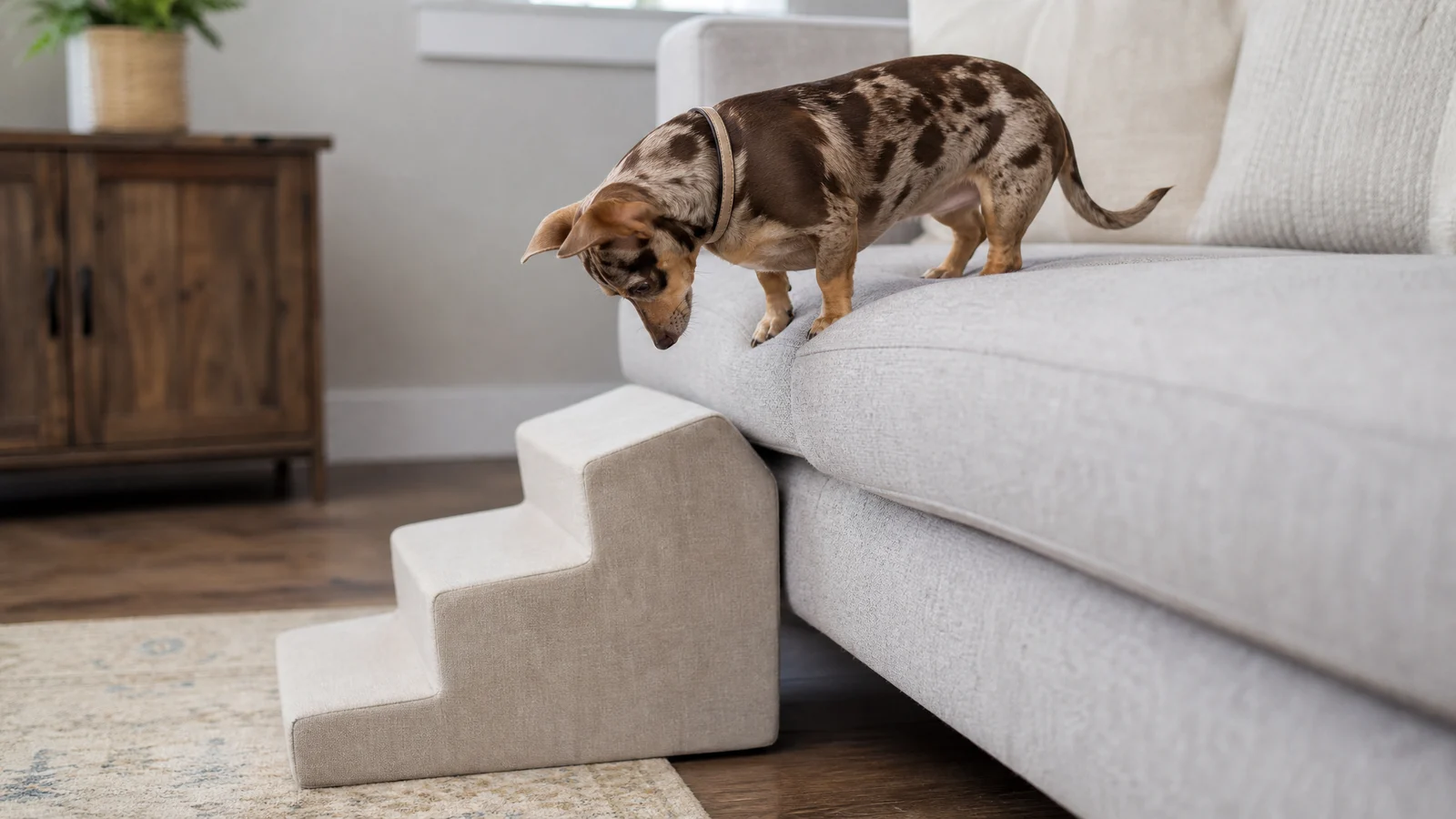
The Chiweenie stops at the edge of the sofa, looks down at the floor, and jumps anyway. Sometimes there is a yelp, and sometimes only a stiff, careful walk to the water bowl a few minutes later, followed by a return to normal as though nothing happened. It is easy to wave off, and just as easy to repeat a hundred times.
What is going on is mostly a matter of build. The Dachshund parent is long and low, and the Chihuahua standard describes a body slightly longer than tall, so a cross may inherit a lot of spine with very little leg underneath. Looked after well, that dog gives you years of cheerful trotting at your heels. Handled carelessly, every leap adds up.
We'll walk you through the back risk and the exercise that suits it, then ramps, rewarded habits, indoor brain games and a daily routine, and finish with the signs the plan is working and the ones that call for your vet.
Guarding Against Chiweenie Back Risk
The first decision comes before any gear or schedule: accept that your Chiweenie may have inherited a back that needs looking after, and commit to protecting it from the first day. Crosses vary a great deal, so you cannot read the spine off the parentage, and one litter can hold a dog built much like a Dachshund beside another closer to a Chihuahua.
Assuming the cautious case costs you a few ramps and some new habits. Assuming the best can cost a dog who learns to wince at stairs. We have trained this cross for many years, and the cautious assumption is the one that is easy to live with.
The Long-Backed Build
The Chihuahua standard calls the body off-square, slightly longer from the point of the shoulder to the point of the buttocks than the height at the withers. The Dachshund is a long, low breed, in a standard size of usually 16 to 32 pounds and a miniature of 11 pounds or under. A Chiweenie may take that proportion from either side, and a dog who weighs very little can still carry a long frame on short legs. Size is no guide to risk here. Shape is.
What Jumping and Stairs Do
Watch a Chiweenie come off a sofa and the problem unfolds in slow motion. The front legs meet the floor first, the long body follows a beat later, and the whole landing happens from a height that is a serious drop for a dog built so close to the ground. The Dachshund side is also described as brave to the point of rashness, which is why the dog who pauses at the edge so often goes anyway.
We cannot diagnose anything from an article, but we can say that a landing repeated many times a day is a habit worth replacing. Stairs work the same way, so decide now that jumping down is off the menu and that you will make the alternative easy. Regular vet visits belong in this plan too, because your vet can check the back and tell you what is normal for your particular dog.
Guarding With Low-Impact Exercise
The second decision is what kind of exercise to give, and the Chihuahua side makes it simpler than you might expect. That parent loves to run and play yet can usually get enough exercise in a very small space, and trotting after their people is often plenty.
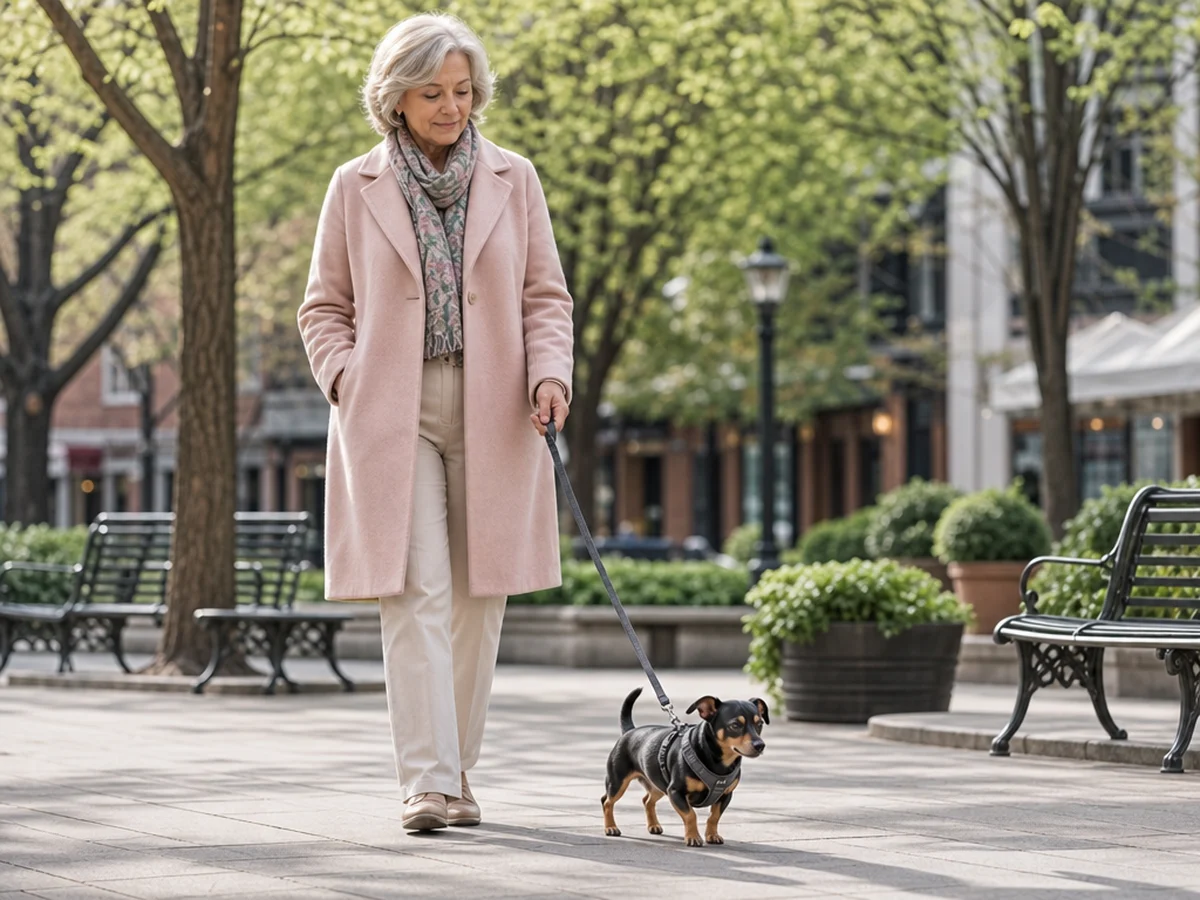
Short, slow walks keep weight and condition. Breed profiles rate the Chihuahua 4 out of 5 for energy, though, so small does not mean sleepy. The aim is to spend that energy on level ground and keep it out of the air.
Short Leashed Walks
Use a harness and a regular leash, which gives you control and keeps pressure off the neck. Let the dog set a slow pace and stop to investigate every fence post. A sniff-heavy stroll tires a Chiweenie nicely, and the Dachshund nose is excellent, so the walk feels long to the dog even when the distance is small. Several brief outings spread across the day suit a long spine better than one long march.
Flat-Ground Play
Common advice for an energetic little dog is to tire them out with fast fetch or a sprint around the yard. For this build we would trade speed for time. Rolling a ball along the floor, or a gentle game of tug with a soft toy on a non-slip rug, spends energy without the skidding turns and hard stops that strain a long back.
Chases that end in a leap are the games to retire, and so are rough games of any kind. Chihuahuas are also too small for roughhousing with children, so supervise that kind of play closely.
Puppies and Cold Days
Puppies deserve extra patience, because introducing exercise slowly protects the joints of any growing dog, and a long-backed puppy has more reason than most. Small dogs also need special care in cold weather, so shorten outings when it is chilly and make up the difference indoors.
Several short leashed walks and flat-ground play are the choice, with leaping and rough games retired.
Chiweenie Ramps and Steps
The third decision is where to put ramps and steps, and the answer is wherever your dog currently jumps. Go through your home and list every place a Chiweenie climbs or drops: the sofa, the bed, the car seat, the back door.
Each one is a spot where a ramp or a set of pet steps can replace a leap. A ramp often suits a long-bodied dog better than tall steps, which can make a short-legged dog stretch, but your dog's size and confidence should decide, and your vet can advise on what fits.
Sofa and Chairs
The sofa is where most of the jumping happens, so start there. Place the ramp against the spot your dog already favors and make sure the base cannot slide on a hard floor. A dog who has leapt up and down for months will not drop the habit overnight, which is why the reward matters more than the ramp itself.
Bed and Car
Beds and cars are higher and more awkward, and a dog who jumps out of a car lands harder than from any sofa. A sturdy ramp works well here, and a ramp that travels in the trunk lets the habit follow you to every destination. Until the dog is confident, lift them in and out with one hand under the chest and the other supporting the hindquarters, so the back never hangs unsupported.
Teaching the Ramp With Treats
Most dogs take to a ramp more readily once it pays. The Dachshund side can be independent and a bit stubborn, so make the rewards good and the sessions brief. Work in small steps:
- Lay the ramp flat on the floor and reward any paw or sniff that touches it, using a marker word the instant it happens.
- Raise it slightly and reward each step of the walk up, then scatter treats at the top so arriving feels like a prize.
- Reward the walk down just as generously, since the descent is where the risk is highest.
- Only then attach it to the sofa, rewarding both directions until the dog heads for the ramp on their own.
Put a ramp at every jump point, and teach each one with treats rather than just installing it.
Rewarding Back-Guarding Habits
The fourth decision is which habits to make automatic, and reward-based training is the natural tool because the Chiweenie is clever and quick to work out what pays. Even tiny dogs need training, and a clever Chihuahua left untrained will happily rule the household.
The Dachshund parent is sensitive and does best with positive methods, so every habit below should be built from treats, praise and patience. Structure helps too, since routine and clear guidelines are part of how dogs learn best.
Three habits matter most for a long spine, and each can be taught in a handful of brief sessions:
- Waiting at the edge of the sofa or bed until you point to the ramp, with a treat for every second spent waiting.
- Standing or sitting calmly while you scoop them up with support under the chest and hindquarters, rewarded as soon as you set them down.
- Greeting people with four paws on the floor, with treats delivered at floor level so bouncing up on the hind legs never earns attention.
Handling practice pays off if your dog ever needs treatment for their back. Brushing and nail trimming double as rehearsal for the exam table, and calm acceptance of touch along the spine, legs and mouth makes any later check easier. Chiweenies can be quick to detect pills hidden in food, and a favorite hiding food tends to work only until the dog smells the medicine.
A relaxed, rewarded routine for taking medicine is sturdier than a trick, and it should always follow your vet's instructions. A trainer quoted on service-dog work says the harder part is raising a dog who is unfazed by new situations. The same idea applies to handling and medicine routines, so begin early and keep it relaxed.
This is general information, not medical advice. Check with your veterinarian before giving any medication or supplement, before changing your dog's diet, and about how to handle a dog who seems sore.
Reward waiting, supported lifts and four-paw greetings until they happen without being asked.
Indoor Brain Games for a Chiweenie
The fifth decision is to trade part of the physical exercise for mental work, which is where the Dachshund nose earns its keep. That parent has an excellent sense of smell, and a Chiweenie who inherits it can spend a rainy afternoon hunting for treats with nothing but nostrils and focus.
Both parent breeds rate a moderate 3 out of 5 for mental stimulation needs, so a few short sessions a day is usually plenty. Our article on scent games and dog sports goes further once the basics are in place.
These options need little gear and no jumping:
- Hide a few treats around a room, say a cue like "find it," and make the hiding places harder over several days.
- Spread some of a meal across a snuffle mat or inside a puzzle feeder, which turns breakfast into several minutes of sniffing and problem solving.
- Cover treats in the cups of a muffin tin with tennis balls and let the dog nudge them away.
- Scatter treats on a towel, roll it up loosely and let the dog unroll it with nose and paws.
Count treats toward the day's food so weight does not creep up, since extra weight adds load to a long back.
Trick training counts as brain work too, with one caution for this build. Choose tricks that keep all four paws on the floor, such as touching your hand, going to a mat or picking up a toy. Begging on the hind legs and tight spinning put awkward loads on the spine, so skip them. End each session while the dog still wants more, because the Dachshund independence shows up fast when the work turns dull.
Let scent games, puzzle feeders and floor-level tricks carry a real share of the day's effort.
A Chiweenie's Daily Guarding Routine
The sixth decision is to combine everything into a day that suits your household, with short sessions spread out rather than one big outing. A long-backed dog does better with small, frequent bursts of activity, and the pattern keeps a clever dog engaged. The exact times matter less than giving safe movement, brain work and rest a regular place, and making sure every jump point in the house already has its ramp.
Morning
Start with a slow leashed walk in a harness and let the dog sniff as much as they like. Serve at least part of breakfast from a puzzle feeder or snuffle mat, and ask for a few rewarded ramp trips before you leave. A morning with a little scent work often leaves a Chiweenie ready to settle while you are out.
Midday
This is the slot for a brief training game and some gentle floor play on a non-slip surface. Practice a supported lift or a wait at the sofa edge, reward it well, and then let the dog rest. If you are away, leave a lick mat or a hidden-treat game so the day does not lean on a single walk.
Evening
Take another easy walk, then wind down with a find-it game or the muffin tin. Check that a ramp sits at the bed or sofa where your dog will end the night, and keep the last hour calm. Your vet is the right person to ask about weight, condition and any change in how your dog moves.
Several short sessions across the day, with a puzzle or scent game in every block, make the routine.
Back-Guarding Signs and Red Flags
The seventh decision is how to tell whether the plan is working, and the answer lies in how your Chiweenie moves rather than how much they do. A well-protected back does not announce itself, so the signs are quiet ones. The dog who once paused at the sofa edge becomes the dog who trots to the ramp as if it were their idea, which is the real aim of the whole plan: making safe movement the easiest thing a bold, clever, long-bodied little dog can do.
Signs that it is working:
- Your dog heads for the ramp or steps without prompting and uses them confidently in both directions.
- Their posture is relaxed, with a level back and a loose, wagging body after walks and play.
- They get up, turn and climb into a favorite spot easily, without stiffness or hesitation.
- They settle after short sessions, pleasantly tired rather than wired.
Signs to stop and ask your vet instead of adjusting the routine on your own.
The first sign is yelping when your dog is picked up, touched along the spine, or after a jump. Pay attention too if they become reluctant to jump, climb stairs or use a ramp they used to take happily, or if you see a hunched back, a tucked belly, or a stiff, careful way of walking.
Wobbling, weakness in the back legs, and paws that drag or scuff along the ground belong on the same list of reasons to call.
Any of these deserves a prompt call, and the sooner the better. Otherwise keep the ramps in place, keep rewarding the safe choice, and keep the walks short, level and varied with a puzzle or a sniff. For a long-backed dog, that steady habit is the best protection you can give.
 Training basicsHow to Potty Train a Chiweenie Puppy Without Guesswork
 Training basicsHow to Train a Chiweenie With Reward-Based House Rules
 Training basicsChiweenie Leash Training for Pulling, Freezing, and Lunging