 Chiweenie
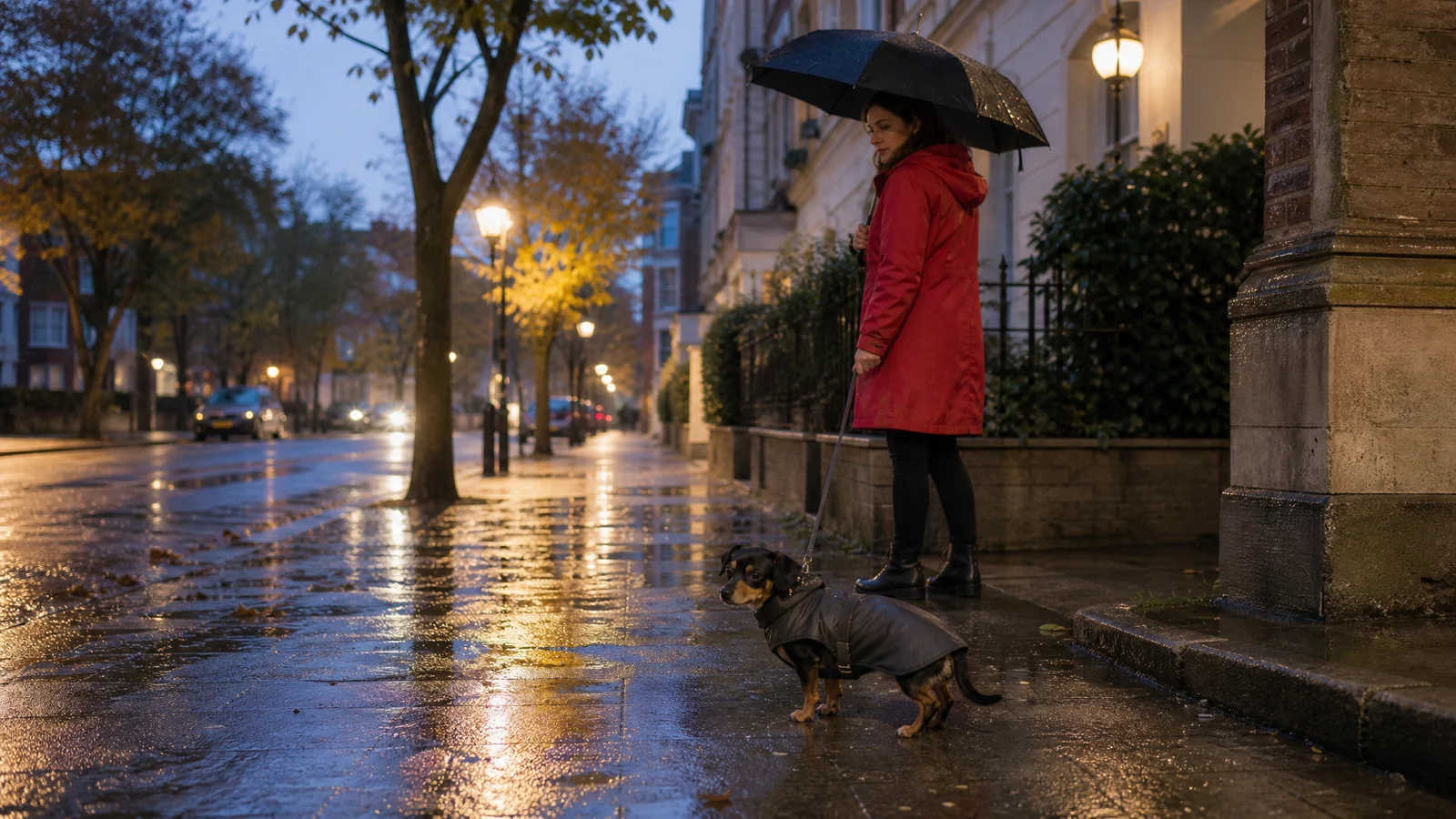
A Chiweenie can pull toward the door, follow a scent sideways, freeze near a noisy corner, and lunge when movement appears. Those behaviors may all tighten the leash, but they do not have one cause. Treating them as separate walk situations makes training clearer and keeps the dog within a workable challenge.
Possible Chihuahua alertness or Dachshund scent focus can suggest what to observe, yet a designer cross does not inherit either trait with certainty. This guide opens five practical case files: preparation, doorway pulling, scent detours, freezing, and lunging. Each uses rewards, distance, and individual body language to build loose-leash walking. The result is a response map, not one answer for every tight line.
Chiweenie Leash Training Before the Walk
The first case begins indoors, where equipment and movement are easier to separate. Choose a well-fitted harness suitable for your dog's body, a regular leash, and rewards you can reach without fumbling. Chiweenies vary in shape, so fit should follow the individual rather than a standard image of the cross.
Introduce the harness through brief, rewarded contact if your dog is uncertain. Show it, mark an approach, reward a nose near the opening, and build toward comfortable wear. A dog who is already worried before the door opens cannot learn much about leash position outside.
Teach that leash slack keeps movement available. Take a few steps across a quiet room, mark the loose line, and reward beside the position you want. Pause before the dog reaches the end, then turn or invite a check-in so tightness is not rehearsed on every repetition.
- Check that the harness permits comfortable shoulder movement and cannot slip off.
- Practice name response and a hand target before adding outdoor distractions.
- Deliver rewards near your leg so reinforcement does not pull the dog across your path.
- Choose a quiet first route with enough space to turn or increase distance.
Regular vet visits belong in a walking plan because movement and tolerance can change with physical comfort. Ask your veterinarian about sudden freezing, limping, reluctance to wear equipment, or a new sensitivity to touch. Do not assume every stopped walk is a training disagreement.
Why Does the Leash Tighten at the Door?
At the doorway, forward access is often the strongest available reward. The dog sees outside, shifts weight ahead, and reaches the end of the leash before the walk has begun. Your task is to make slack the action that opens the next small piece of the route.
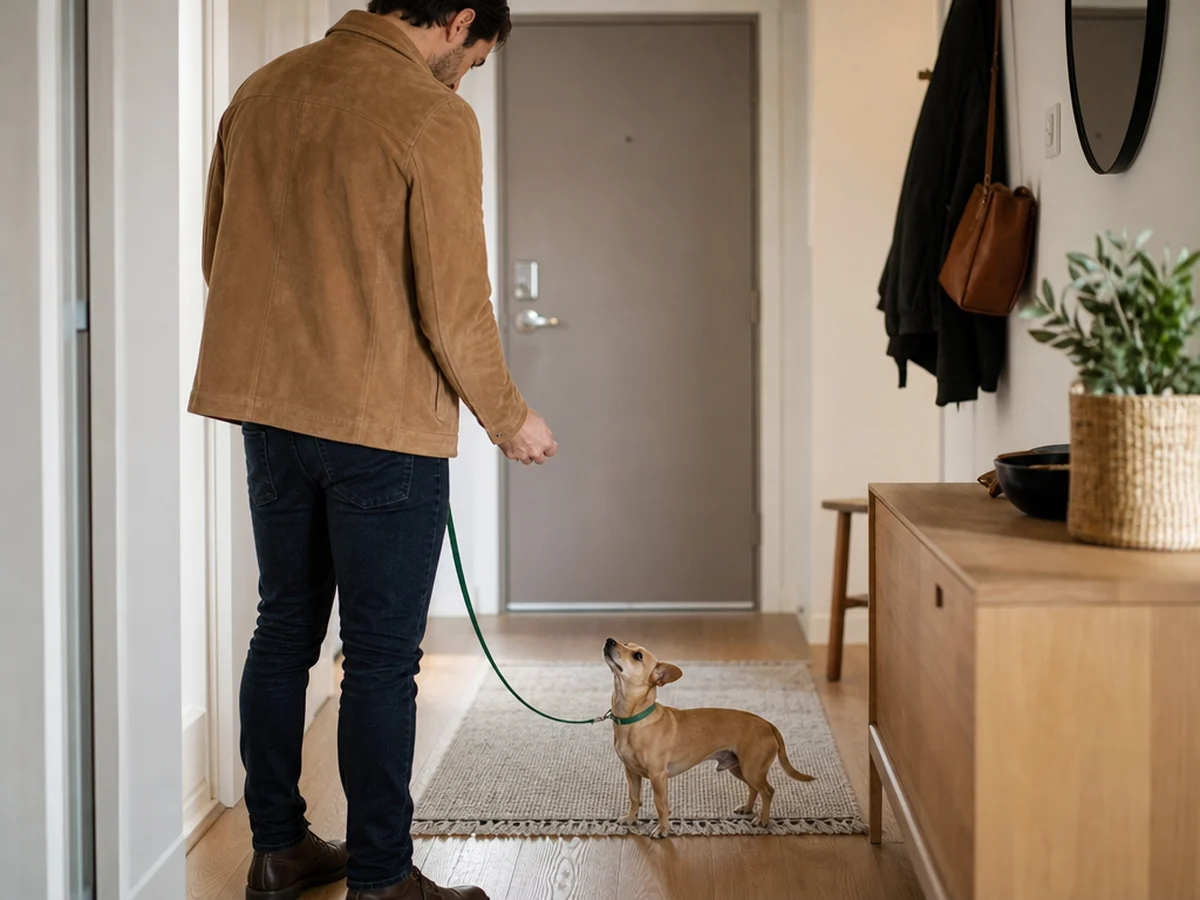
Begin several steps from the closed door. Reward orientation toward you, approach the door together, and move away before excitement overwhelms the lesson. Touch the handle on an easy repetition, then open the door slightly while continuing to reward a loose line.
The loose-leash guidance recommends stopping when pulling begins and waiting for slack rather than pulling back. In this doorway case, the closed path supplies the pause. Movement resumes when the dog shifts back and the line loosens.
When the Doorway Is Too Exciting
Move the lesson farther inside and make the view smaller. A gate, a partially covered window, or a quieter exit may lower the challenge. Reward calm movement toward the route, then end the repetition before the dog reaches a frantic state.
Use a familiar indoor skill if it genuinely helps. A mat can create a starting place, but it should not become a long endurance exercise before every potty trip. Keep functional outings easy and schedule separate doorway practice when there is no urgent need to leave.
Our Chiweenie potty training guide organizes urgent puppy outings around a prepared route. That setup prevents leash practice from delaying elimination while the two skills are still developing.
Scent Detours in Chiweenie Leash Training
The scent case looks like pulling, but the dog's nose may be guiding the whole body sideways. The Dachshund profile describes an excellent sense of smell and focused trailing. A Chiweenie may show that influence, but you should confirm it by watching where attention goes.
If the dog follows odor trails with a loose body and can eat, the environment may be exciting rather than frightening. Build a bargain around access. Mark a glance toward you or a moment of slack, reward near your leg, then release the dog to investigate a safe scent.
Reward delivery should support the direction you want next. Feed close to your walking side before moving together, or place the reward slightly behind you when forward momentum is building. Thoughtful placement can create slack without turning the leash into the source of the change.
Sniffing does not have to compete with leash training. It can become the outcome that makes check-ins valuable. Use a consistent release word so the dog knows when the route is open for exploration and when you are asking for a few connected steps.
When the Nose Wins Every Time
Begin on a less scented surface or after the dog has had a chance to explore a small area. Ask for one easy hand target, reward, and release back to sniffing. Several short exchanges teach more than trying to hold walking position through an entire fascinating block.
Increase connected steps slowly while keeping planned sniff breaks. If the dog repeatedly hits the end of the leash, shorten the path and reward earlier. The useful threshold is the point before momentum and scent focus make turning difficult.
Do not assume the Chihuahua side should make short walks sufficient or the Dachshund side should make every walk nose-led. Observe energy, recovery, and interest in your individual dog. Parent traits are possible influences only, never a schedule or personality guarantee.
Freezing During Chiweenie Leash Training
Freezing needs a different response from forward pulling. The dog may be processing a new surface, sound, object, person, or physical sensation. Look at the whole body before inviting movement. A loose pause with active sniffing differs from a low posture, tucked tail, or fixed stare.
Stand without tightening the leash and give the dog space to gather information. If they can take food, place a reward where one comfortable step is possible. You can also turn toward a familiar route, move behind a visual barrier, or increase distance from whatever changed the walk.
Give the dog time to turn their head and shift weight before asking for movement. A hand target placed within easy reach can offer a familiar next action, but it should remain optional when fear or discomfort is possible.
Pulling the dog forward would hide the reason for the stop and may increase worry. Instead, reward voluntary movement in either safe direction. A retreat can be a useful choice when it restores the dog's ability to orient, eat, and move normally.
Separate Training From Physical Comfort
Check the harness, paws, temperature, ground surface, and recent activity. If freezing is sudden, repeated, or paired with altered movement, end the walk and contact your veterinarian. More enticing rewards should not be used to push through possible discomfort.
If the trigger is environmental, return at a distance where the dog notices without becoming stuck. Reward observation and disengagement, then leave while recovery remains easy. Repeated safe exits can build confidence without forcing a close approach.
Is Leash Lunging Fear or Frustration?
Lunging is movement, not an explanation. One dog may be trying to create distance, another may want access, and another may be overwhelmed by sudden motion. The training plan begins with enough distance to read earlier signals before the leash is tight and the response is large.
The body-language guidance notes that subtle fear signs can appear before barking or snapping. Watch for lip licking, ears drawn back, averted gaze, or a rigid body. Those signs support leaving sooner rather than asking for closer practice.
Create a Working Observation Zone
Choose a route with room to cross, turn, or step behind a barrier. At the distance where your dog can notice and still respond, mark a glance at the trigger and reward turning back. Move away before attention becomes fixed.
For likely frustration, the same distance protects learning. Reward orientation and calm movement rather than using access to the person or dog as the immediate goal. Greetings are not required for a successful walk, and repeated on-leash access can make pulling toward every social opportunity stronger.
Use an Exit Cue Before the Lunge
Teach a cheerful turn in a quiet place. Say the cue, move away, and reward the dog for following. Practice until the movement is easy, then use it outdoors at the first sign that attention is narrowing, not after the dog has already launched forward.
If lunging is frequent, escalating, or difficult to manage safely, consult a qualified reward-based behavior professional. Management and distance protect everyone while a tailored plan develops. Our guide to Chiweenie temperament explains why recovery and context matter more than a fixed breed label.
Loose-Leash Walking Beyond the Block
Generalize the skill by changing one feature at a time. Try another quiet street, a different time of day, or a slightly longer route while keeping rewards and exit options familiar. A loose leash in the living room is a foundation, not proof that every environment is ready.
Begin each new route with a short orientation period. Let the dog look and sniff from a workable spot, reward the first voluntary check-in, and decide whether to continue. Starting with information can prevent the first stretch of the walk from becoming an immediate pull.
Track progress through quality rather than distance. Look for more voluntary check-ins, earlier recovery after noticing movement, easier turns, and fewer moments at the end of the leash. Those changes show that the dog can think while moving through the environment.
Keep the five cases separate when a walk becomes difficult. Doorway pulling needs access rules, scent detours need planned sniffing, freezing needs information and comfort, and lunging needs distance plus an exit. One walk may contain several cases, but each still deserves its own response.
Loose-leash walking is a conversation with the individual Chiweenie in front of you. Parent-breed possibilities may help you ask better questions, yet observation supplies the answer. Prepare the route, reward the useful choice, and leave enough room for the dog to recover and choose again.
 BehaviorChiweenie and Kids: Teaching Gentle Handling for a Tiny Dog
 BehaviorWhat's a Chiweenie Doing Under the Blankets?
 BehaviorTeaching Your Chiweenie to Sound One Alarm at the Window and Stop